Proudly serving Phoenix, Scottsdale, Glendale, Mesa, Tempe, Chandler & surrounding areasCall or Text 24/7: 602-449-8063
Aerial view of a residential neighborhood with Saguaro cacti and stucco homes in Phoenix, AZ under a clear morning sky.

Green Pool Cleanup, Algae Removal & Chemical Recovery in Phoenix, AZ

Phoenix Expert Pool Service restores green pools for homes and rental properties across Phoenix and the metro area. Our green pool cleanup combines calibrated water testing, calculated shock treatment, wall-and-floor brushing, filter cleaning, and circulation checks. We also handle weekly pool service, pool cleaning, equipment repair, pump repair, acid washing, tile cleaning, and chemical service when those needs are part of the restoration plan.

Phoenix air temperatures can push past 105 degrees, while summer pool water regularly rises above 90 degrees and ultraviolet exposure can cut effective sanitizer levels within hours. Dust storms and monsoon runoff add phosphates, nitrates, and organic debris, so a brief circulation or chemistry failure can become an algae bloom quickly. We test free chlorine, combined chlorine, pH, total alkalinity, cyanuric acid, calcium hardness, and phosphates before choosing treatment, which helps protect plaster and tile from avoidable scale.

Our technicians use Certified Pool Operator training through the Pool & Hot Tub Alliance, follow Arizona Department of Health Services public-pool water chemistry protocols, and work within Arizona licensing requirements for pool service and repair.

Phoenix Expert Pool Service provides green pool cleanup throughout Phoenix, Scottsdale, Tempe, Mesa, Chandler, and Glendale.

★ ★ ★ ★ ★4.9/5 Average Rating · 20+ Years of Experience · Thousands of Customers Helped · Licensed & Insured · Residential & Commercial

Green Pool Cleanup Options & Benefits

What Does Green Pool Cleanup Involve?

Green pool cleanup starts by identifying why sanitizer stopped holding. A visibility check and calibrated readings separate early light-green water from a dense bloom or black swamp condition, while also showing whether chemistry can be corrected without draining.

Treatment combines a shock dose calculated from pool volume and bloom severity with brushing that breaks algae and biofilm away from walls, floors, steps, and the tile line. Calcium hypochlorite or sodium dichlor may be used according to the existing cyanuric acid level, with targeted algaecide reserved for mustard or black algae.

Filtration and circulation finish the work chemical treatment begins. We clean cartridge elements or backwash sand filters, inspect pump and skimmer function, clear return-flow problems, and retest until the drain is visible and chlorine holds steady.

Benefits of a Complete Green-to-Clear Service

A complete cleanup treats the algae, removes dead material, and corrects the condition that allowed the bloom to take hold. That coordinated approach produces a clearer recovery path than adding shock without checking circulation or filter performance.

  • Shock dosing matched to actual pool gallons
  • Brushing that exposes algae beneath surface biofilm
  • Filter cleaning that removes dead algae instead of recirculating it
  • Pump and return-flow checks for proper water turnover
  • Chemistry adjustments that account for hard Valley water
  • Targeted treatment for green, mustard, or black algae
  • Follow-up testing tied to water clarity and chlorine demand
  • A prevention plan based on the pool's equipment and maintenance needs
Green-to-Clear Services

Phoenix Green Pool Cleanup Services

Each green pool needs a treatment plan based on water condition, surface type, filter performance, and the cause of the bloom. These six services cover the diagnostic, chemical, mechanical, and surface-restoration work described in our cleanup process.

Water Testing & Diagnosis

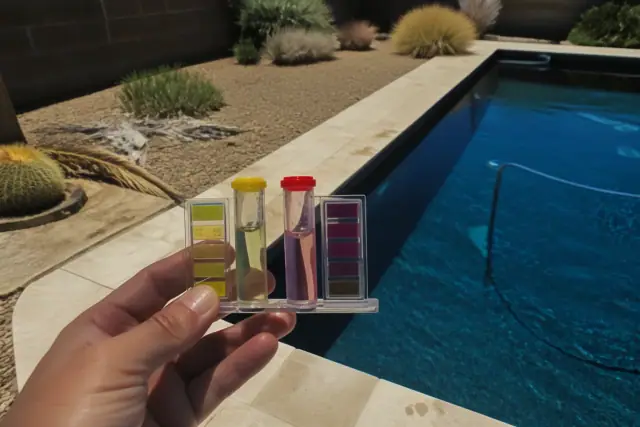
Technician testing water with reagent vials by a swimming pool on a sunny day in Phoenix, AZ.

We read chlorine, pH, alkalinity, cyanuric acid, calcium hardness, and phosphates, then pair those results with a visibility and equipment check. The test profile shows whether the pool has an early bloom, dark-green water, stabilizer lock, or a circulation failure.

Request Estimate

Calculated Shock Treatment

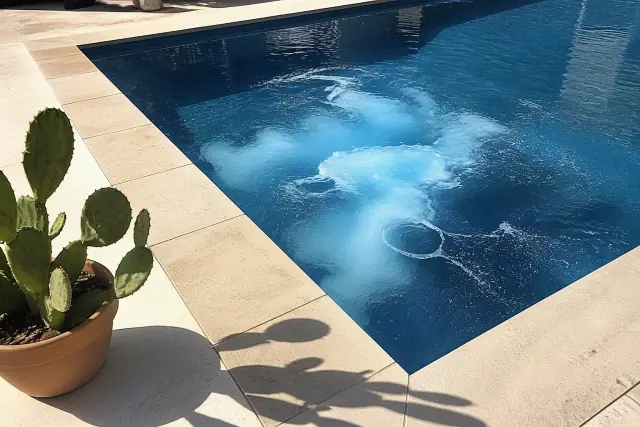
Chemical shock treatment swirling in a backyard swimming pool on a sunny day in Phoenix, AZ.

Shock is sized to gallons and chlorine demand rather than added by guesswork. A moderate bloom in a standard 15,000 to 20,000 gallon Phoenix pool may require several pounds of calcium hypochlorite across the initial and follow-up treatments, while severe water can call for double or triple a maintenance dose.

Request Estimate

Brushing & Algae Removal

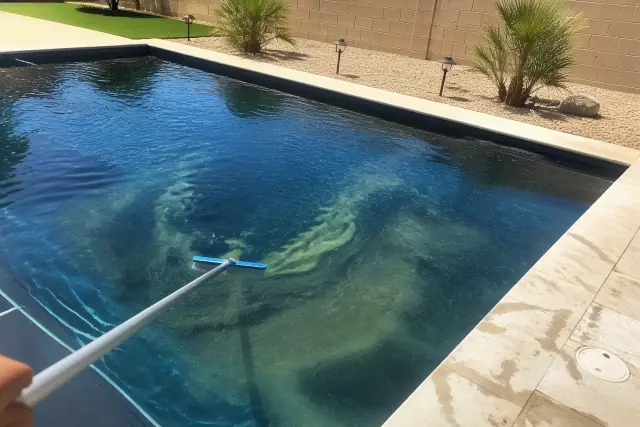
Long-handled brush cleaning algae from a residential swimming pool in Phoenix, AZ.

We brush walls, floors, steps, and the tile line so treatment reaches colonies protected by biofilm. Mustard and black algae need especially deliberate surface work because they cling to or root into the finish instead of remaining suspended in the water.

Request Estimate

Filter Cleaning & Optimization

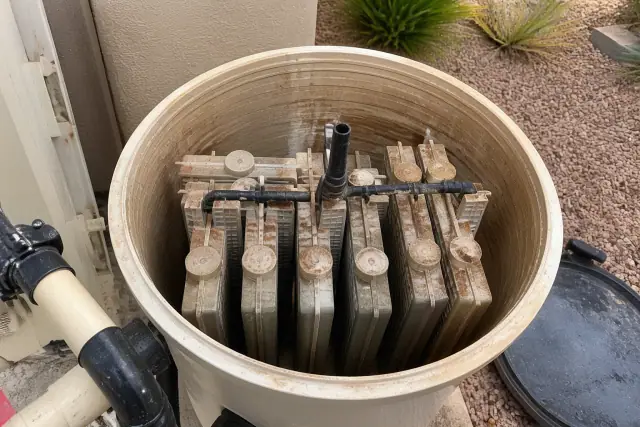
Opened pool filter housing with grid cartridges showing sediment during a cleaning service in Phoenix, AZ.

Dead algae has to leave the circulation loop. We clean or replace degraded cartridge elements, backwash sand filters, and confirm that the system can capture cloudiness instead of sending it back through the returns.

Request Estimate

Pump & Circulation Repair

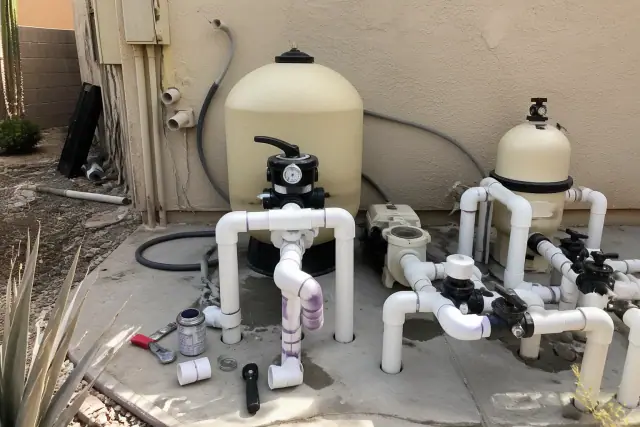
Pool equipment pad with filtration tanks and PVC plumbing repairs at a residential jobsite in Phoenix, AZ.

A failed or undersized pump can keep treated water from reaching the entire pool. We check the impeller, skimmer function, and return jets, then address equipment problems that prevent the recommended turnover of once every 8 to 12 hours.

Request Estimate

Acid Wash & Stain Treatment

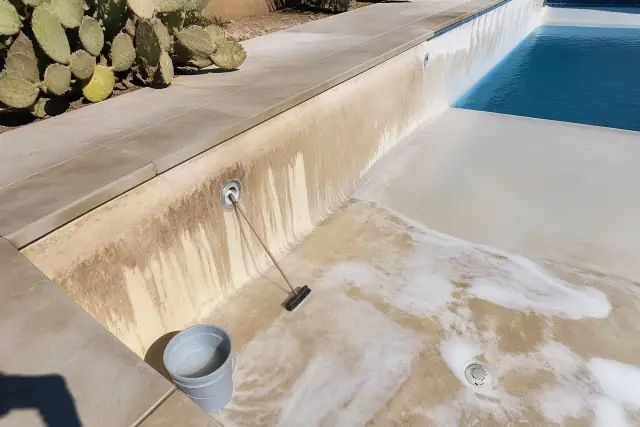
Acid wash and stain treatment on mineral-stained pool plaster at a residential worksite in Phoenix, AZ.

When calcium buildup, mineral staining, or old algae residue remains after brushing and shock, an acid wash may be appropriate. The service uses diluted muriatic acid on drained plaster with controlled contact time and is reserved for conditions that surface cleaning cannot correct.

Request Estimate
Cleanup Severity

Green Pool Plans by Severity

Water color alone does not determine the plan. We also consider drain visibility, organic debris, chlorine demand, filter condition, circulation, algae type, and whether staining remains after the water begins to clear.

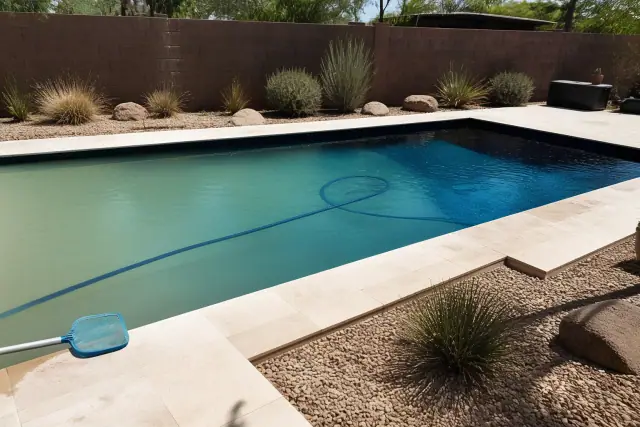
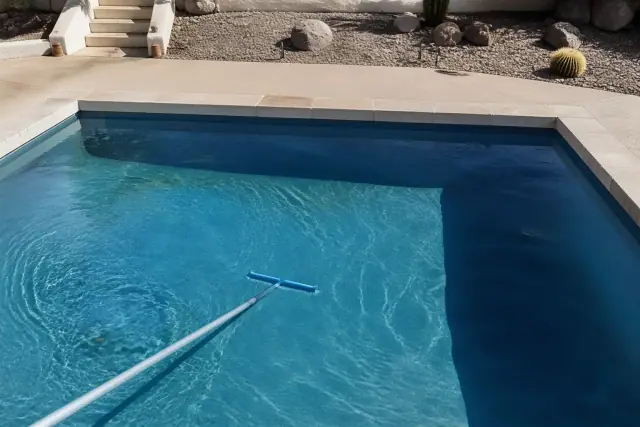
Clear water and cleaning equipment by a rectangular pool in a Phoenix, AZ backyard.

Light Green Pool Cleanup

Light-green water often follows a day or two of low chlorine while the pump and filter still work. Once the pool is shocked, brushed, and rebalanced, it can clear in as little as one to two treatment cycles.

  • Early-stage green or cloudy water
  • Working circulation and filtration
  • Calculated initial shock dose
  • Full wall-and-floor brushing
  • Chemistry and clarity verification
Request Estimate
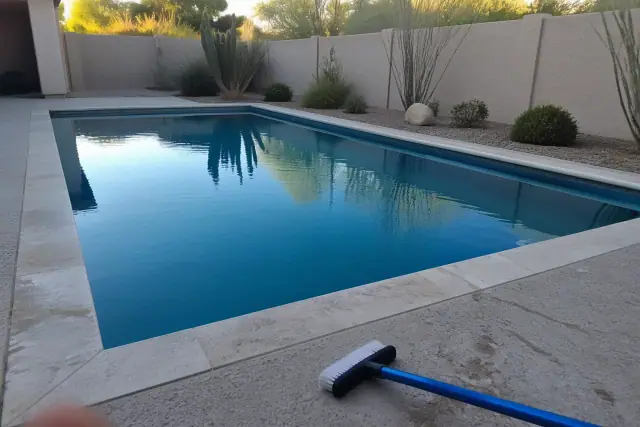
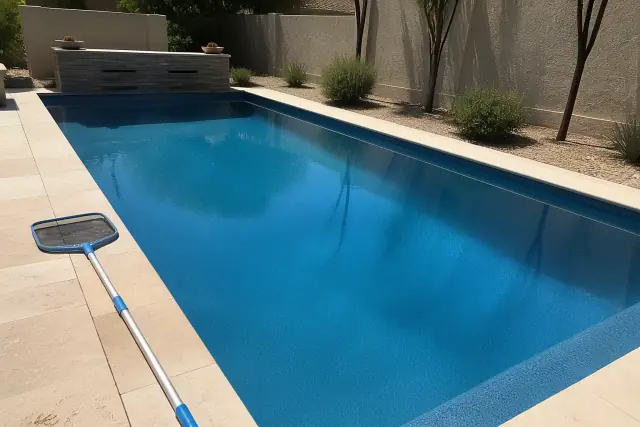
A clean rectangular pool with blue water and a pool brush on the deck of a home in Phoenix, AZ, with desert landscaping.

Dark Green Pool Restoration

A dark-green pool after a week of neglect or a pump failure needs heavier chlorine demand management. Recovery generally takes 3 to 7 days with multiple brushing passes, filter cleaning, and two to three follow-up visits as clarity improves.

  • Heavy shock based on bloom density
  • Repeated brushing to break up colonies
  • Filter cleaning between treatment stages
  • Equipment checks for the original failure
  • Staged retesting as chlorine demand drops
Request Estimate
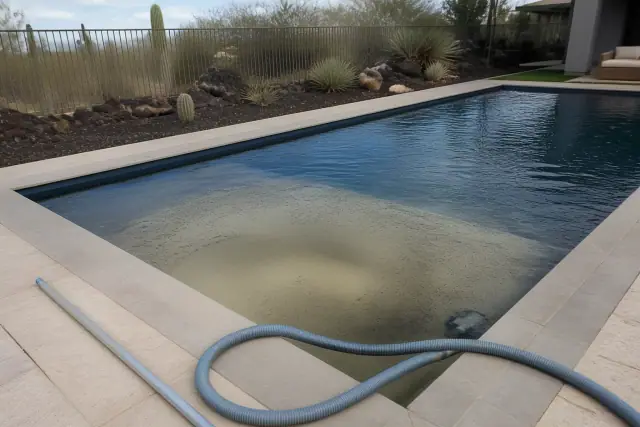
A technician performing a green pool recovery in Phoenix, AZ, with a vacuum hose, telescoping pole, and murky water.

Black Swamp Pool Recovery

Zero visibility and heavy organic debris call for an on-site drain-versus-treat assessment. Some swamp-condition pools can be restored chemically, while others need a partial drain-down before treatment can work efficiently.

  • Debris removal and visibility assessment
  • Water testing before a drain decision
  • High-demand shock and agitation
  • Intensive filtration correction
  • On-site quote based on pool condition
Request Estimate
Mustard and black algae treatment in a backyard swimming pool in Phoenix, AZ.

Mustard & Black Algae Treatment

Mustard algae appears as a resistant yellow-green film, while black algae forms spotted colonies rooted into plaster pores. These growth patterns need targeted algaecide and deliberate brushing rather than shock alone.

  • Algae identification before treatment
  • Targeted algaecide for resistant colonies
  • Stainless steel brushing for rooted black algae
  • Tile, step, wall, and floor agitation
  • Follow-up checks for surviving patches
Request Estimate
Crystal clear water in a residential swimming pool after cleaning in Phoenix, AZ, with a pool net on the deck.

Weekly Pool Service After Cleanup

Ongoing weekly service helps keep the same heat, debris, and equipment issues from producing another bloom. For a standard residential pool, weekly service typically runs $120 to $175 a month, or roughly $1,032 a year.

  • Free chlorine reset to 1-3 ppm
  • pH maintained within 7.2-7.8
  • Cyanuric acid checked every few weeks
  • Weekly brushing, vacuuming, and basket cleaning
  • Monitoring before 0.5 ppm chlorine falls to zero in July heat
Request Estimate
Choosing the Right Treatment

Choosing the Right Green Pool Cleanup Plan

The right plan depends on bloom severity, pool volume, visibility, algae type, chemical balance, filter media, pump performance, and the condition of plaster and tile. We use those findings to decide between chemical treatment, equipment repair, follow-up visits, partial draining, or an acid wash, then quote the work for the actual pool.

Calibrated Water Testing

Treatment begins with measured free and combined chlorine, pH, alkalinity, cyanuric acid, calcium hardness, and phosphate levels. Those readings guide each dose and help avoid creating scale while correcting algae.

Trained, Standards-Based Service

Our technicians use Certified Pool Operator training through the Pool & Hot Tub Alliance and water-chemistry protocols established under Arizona Department of Health Services public-pool guidance. Phoenix Expert Pool Service operates within the licensing requirements that apply to pool service and repair work in Arizona.

Cleanup & Equipment Capability

We carry commercial shock, algaecides, cartridge and sand-filter cleaning tools, and acid-wash supplies for the cleanup work described here. For basic cases, that inventory supports moving from assessment into treatment without waiting for a second truck roll.

Measured Treatment, Clear Next Steps

Why Choose Phoenix Expert Pool Service for Cleanup?

Green water is a symptom, so our work pairs chemistry correction with brushing, filtration, and an equipment diagnosis. You receive an honest recommendation based on test results and pool condition, including whether a damaged filter, failed pump, partial drain, or stain treatment belongs in the restoration plan.

Request Cleanup Assessment

Intense Sun & Chlorine Loss

Phoenix temperatures above 105 degrees and pool water above 90 degrees accelerate algae growth. High ultraviolet exposure also burns chlorine off quickly, sometimes reducing effective sanitizer within hours instead of days.

High Calcium & Scale

Water from Salt River Project and Central Arizona Project systems can push pool calcium hardness above 400 ppm over time. When pH is also unbalanced, scale and cloudiness can develop and shield algae from direct sanitizer contact.

Monsoon Debris & Algae Nutrients

Dust storms and monsoon runoff carry organic debris, phosphates, and nitrates into the pool. The July-to-September storm season combines that nutrient load with more than 300 days of annual sunshine, making short sanitizer dips especially consequential.

Pump or Filter Failure

A failed pump, clogged filter, or missed service visit can leave the water stagnant long enough for a bloom to establish. In Phoenix heat, circulation stopping for 48 to 72 hours may be enough, including during a two-week vacation when equipment trouble goes unnoticed.

Mustard or Black Algae

Mustard algae resists ordinary chlorine levels as a yellow-green film, while black algae anchors into plaster pores in stubborn spots. Both need more surface agitation and targeted treatment than common free-floating green algae.

Stabilizer Lock & Imbalanced Water

Free chlorine below 1 ppm, pH outside 7.2 to 7.8, or depleted cyanuric acid can open the door to algae. Excessive stabilizer creates the opposite problem by locking chlorine into an inactive state, so the treatment dose has to follow the complete test profile.

How It Works

Our Green Pool Cleanup Process

Our six-step process moves from diagnosis through stable water without separating chemistry from circulation. Each stage uses the pool's readings, volume, surface condition, and equipment performance to determine what comes next.

01.

Test the Water & Check Visibility

We measure chlorine, pH, alkalinity, cyanuric acid, calcium hardness, and phosphates, then check drain visibility. The findings classify the bloom and reveal whether hard water or stabilizer levels will affect treatment.

02.

Calculate & Apply Treatment

We calculate shock from pool gallons and bloom severity, choosing calcium hypochlorite or sodium dichlor according to the chemistry profile. Application is scheduled in the evening or early morning when possible so direct desert sun does not consume the dose too quickly.

03.

Brush Every Pool Surface

Walls, floors, steps, and the tile line are brushed to open algae colonies and biofilm to sanitizer. Resistant mustard and black algae receive the targeted agitation their surface attachment requires.

04.

Clean the Filter & Restore Flow

We clean cartridge elements or backwash sand filters, inspect pump and skimmer function, and clear return-flow problems. Degraded media or cartridges are identified for replacement instead of being left to recirculate dead algae.

05.

Retest After 24 Hours

We retest 24 hours after the initial treatment and adjust the chemistry if chlorine demand remains high. Brushing and filtration continue until the water reads clear at the drain.

06.

Verify Stability & Plan Prevention

Once the water is clear and chemistry holds for 48 hours, we confirm the cleanup result and discuss prevention. Weekly testing, brushing, vacuuming, basket cleaning, and equipment monitoring help keep the original conditions from returning.

Restore Clear Water

Schedule a Green Pool
Cleanup
Assessment

Green pool cleanup in the Phoenix area generally runs $300 to $800 depending on pool size, bloom severity, and whether equipment work is needed. Request an assessment so the water and circulation system can be tested before your cleanup is quoted.

Green Pool Help

Green Pool Cleanup FAQs

These answers cover cleanup cost, timing, treatment, swimming safety, equipment issues, and preventive care for Phoenix pools. A water and equipment assessment is still the right basis for a pool-specific recommendation.

Call Phoenix Pool Experts

Green pool cleanup in the Phoenix area generally runs $300 to $800, depending on pool size, bloom severity, and whether equipment repair is needed. A mild 15,000 gallon pool with working circulation is a different job from a 25,000 gallon swamp-condition pool that needs multiple visits. Weekly maintenance after cleanup typically runs $120 to $175 a month for a standard residential pool.

The fastest approach combines a shock dose sized to actual pool volume, thorough brushing of the walls and floor, and filter cleaning or backwashing. Proper pump circulation matters just as much because stagnant water can undo chemical treatment. Light-to-moderate Phoenix pools often clear in 3 to 7 days when all parts of the process are addressed together.

A green pool on an abandoned, foreclosed, or clearly unmaintained property can be reported to the Maricopa County Environmental Services Department Healthy Swimming Hotline at 602-506-7900. That public-health reporting process is separate from hiring a cleanup service for your own pool.

Yes, most green pools can be restored with shock, brushing, filtration correction, and chemistry balancing when the surfaces and equipment are structurally sound. A drain may be considered for heavy organic debris, stubborn staining that needs an acid wash, or calcium hardness and total dissolved solids that cannot be corrected chemically. The decision should follow on-site water testing.

Effective weekly maintenance includes testing and balancing chlorine, pH, and alkalinity, brushing walls and tile, vacuuming the floor, cleaning skimmer baskets, and checking pump and filter performance. Cyanuric acid should be checked every few weeks because clear-looking water can still have inactive chlorine. Consistency matters in Phoenix because heat and ultraviolet exposure consume sanitizer quickly.

Repair work, equipment installation, and structural modifications generally require work under an Arizona Registrar of Contractors license, while basic cleaning and chemical service have fewer licensing requirements. Phoenix Expert Pool Service operates within the standards that apply to its work, and its technicians use Certified Pool Operator training recognized by the Pool & Hot Tub Alliance. Licensing is especially relevant when cleanup includes equipment, plumbing, or acid-wash work.

A complete service includes water testing, calculated shock treatment, brushing of pool surfaces, filter cleaning or backwashing, pump and circulation checks, and follow-up retesting. It should also identify whether equipment failure caused the bloom. Acid washing is a separate surface-restoration step used only when staining or scale remains.

Most green pools do not need draining. A partial or full drain may be considered for swamp conditions with heavy organic debris, staining that requires acid washing on an empty shell, or water with calcium hardness and total dissolved solids too high to rebalance. We use test results and surface condition to make the drain-versus-treat recommendation.

Light-green water may clear in one to two treatment cycles, while dark-green blooms generally take 3 to 7 days. The initial shock, brushing, and filter cleaning can often be completed in a single same-day visit, but moderate or severe conditions usually need two to three follow-up visits. Timing depends on bloom density, chlorine demand, filtration, and equipment condition.

Swimmers should stay out until free chlorine drops below 5 ppm and pH has stabilized. We verify those readings on-site instead of relying on water clarity alone.

Green algae is the most common and may float in the water or cling to surfaces. Mustard algae appears as a resistant yellow-green film, while black algae forms spotted colonies rooted into plaster pores. The algae type changes the brushing and algaecide plan.

High heat and ultraviolet exposure speed algae growth and reduce effective chlorine, while dust storms and monsoon runoff add organic debris, phosphates, and nitrates. Hard Valley water can also contribute scale that shields algae when pH is out of balance. A short pump, filter, or chemical-service interruption can bring those factors together.

The cleanup process includes checks of pump circulation, impeller function, skimmer flow, return jets, and filter condition. Cartridge cleaning or sand-filter backwashing is part of the service described here, while degraded media, a failed pump, or another repair is identified and quoted rather than hidden by chemical treatment.