Proudly serving Phoenix, Scottsdale, Glendale, Mesa, Tempe, Chandler & surrounding areasCall or Text 24/7: 602-449-8063
Aerial view of a residential neighborhood with Saguaro cacti and stucco homes in Phoenix, AZ under a clear morning sky.

Pool Repair, Leak Detection & System Diagnostics in Phoenix, AZ

Phoenix Expert Pool Service provides professional pool repair in Phoenix for residential, HOA, and commercial pools. Our services cover pump and equipment repair, filter cleaning, leak detection, heater repair, green pool cleanup, acid washing, tile cleaning, and weekly pool care. We diagnose circulation, plumbing, surface, and water-chemistry problems before recommending work. Customers across Phoenix can request a free repair estimate with the cost explained before work begins.

Peak-summer evaporation can reach a quarter-inch or more per day, while dark plaster surfaces can climb past 100°F. Heat, UV exposure, hard water, dust, pollen, and monsoon debris accelerate wear on seals, filters, heaters, salt cells, and controls. Our Certified Pool Operators use pressure readings, flow measurements, visual inspection, and APSP-7 chemistry parameters to identify the cause. Work involving plumbing, electrical, or structural components follows Arizona Registrar of Contractors licensing requirements.

Diagnostics start before the quote, not after. We offer a free pool repair estimate and can walk your equipment pad the same week.

Phoenix Expert Pool Service provides pool repair throughout Phoenix and the Valley, including Tempe, Scottsdale, Chandler, Glendale, and Mesa.

★ ★ ★ ★ ★4.9/5 Average Rating · 20+ Years of Experience · Thousands of Customers Helped · Licensed & Insured · Residential & Commercial

Pool Repair Options & Benefits

What Does Professional Pool Repair Cover?

Pool repair starts by identifying whether the problem comes from circulation, filtration, plumbing, heating, controls, water chemistry, or the pool surface. Across Phoenix's 517.9 square miles, desert heat and hard water can make several symptoms appear at once.

We check pressure gauges, return flow, visible fittings, electrical behavior, and equipment condition before separating a repair from routine cleaning or replacement. Leak diagnostics can add bucket, dye, plumbing-pressure, dive, or electronic testing when water loss is the concern.

The same diagnostic discipline applies to backyard pools, HOA facilities, and commercial pools. Commercial work follows Maricopa County Environmental Services expectations for chemistry logging and circulation, while residential water is tested and balanced with the same APSP-7 parameters.

Benefits of Prompt Pool Repair

Correcting the source of a pool problem protects water quality, equipment life, and the surrounding property. It also helps prevent a small seal, filter, or chemistry issue from becoming a larger plumbing or surface project.

  • Restore return flow so sanitizer can circulate evenly
  • Reduce pump strain caused by clogged filters and high pressure
  • Confirm true leaks before excavation or plumbing work
  • Clear algae before it stains plaster and tile
  • Protect heaters, salt cells, controls, and valve actuators
  • Match the repair or replacement to pool gallonage and plumbing
  • Get repair costs explained before work starts
  • Receive same-day priority for active water loss or electrical hazards
Phoenix Pool Repair Services

Complete Pool Repair Services

From equipment-pad failures to water-loss and surface problems, our repair services address the parts of a Phoenix pool most affected by heat, UV, mineral scale, dust, and monsoon debris. Each recommendation begins with the symptom and the equipment condition, not a one-size-fits-all replacement.

Pool Pump Repair

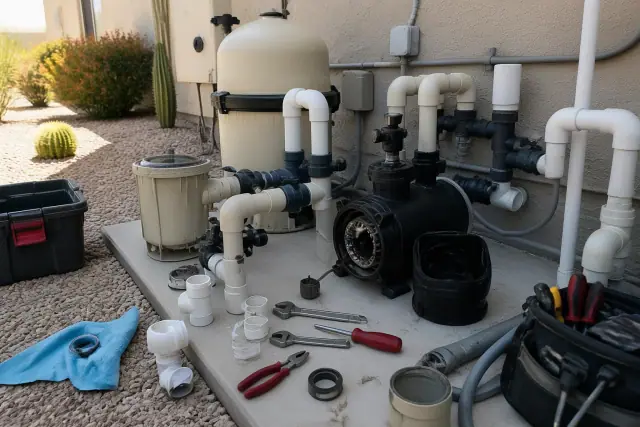
Pool pump repair in progress with tools and plumbing on a concrete slab at a residential home in Phoenix, AZ.

Phoenix pumps often run near-daily for six to seven months a year. We diagnose grinding bearings, leaking shaft seals, failed capacitors, breaker trips, air in the lines, and weak return flow; a clean-filter pressure far outside the normal 10-20 PSI range can also reveal a circulation problem.

Request Estimate

Pool Filter Cleaning and Repair

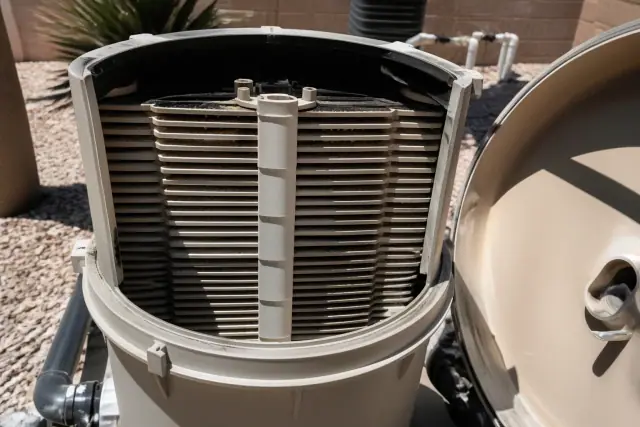
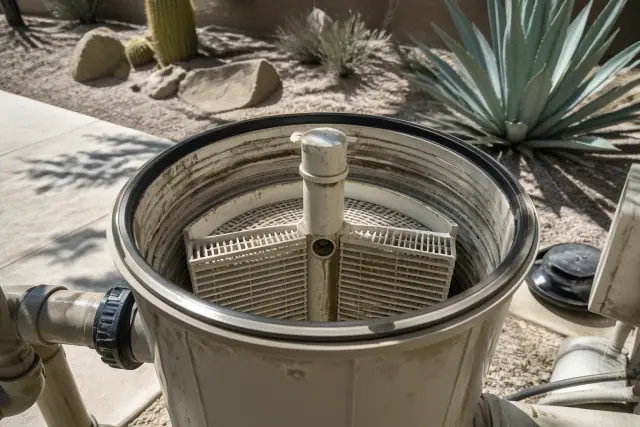
Opened pool filter housing with dirty grid cartridges during a repair job in Phoenix, AZ.

Cartridge, DE, and sand filters need different cleaning methods. We inspect pressure rise, media condition, cartridges, grids, and return-water clarity to determine whether rinsing, degreasing, backwashing, teardown, or component replacement is appropriate.

Request Estimate

Pool Leak Detection and Repair

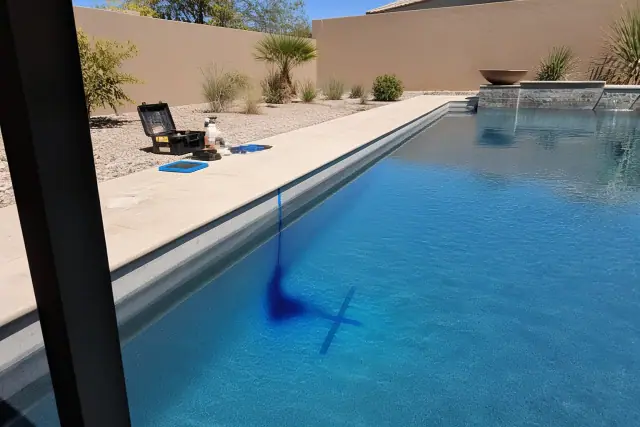
A technician marks a pool leak with dye and tape at a residential backyard pool in Phoenix, AZ.

We compare water loss against normal evaporation with a bucket test, then narrow the source with dye testing, line-pressure testing, dive inspection, or electronic detection. Skimmer and light-niche leaks may be sealed on-site, while underground plumbing can require spot excavation, pipe repair, or rerouting.

Request Estimate

Pool Heater Repair

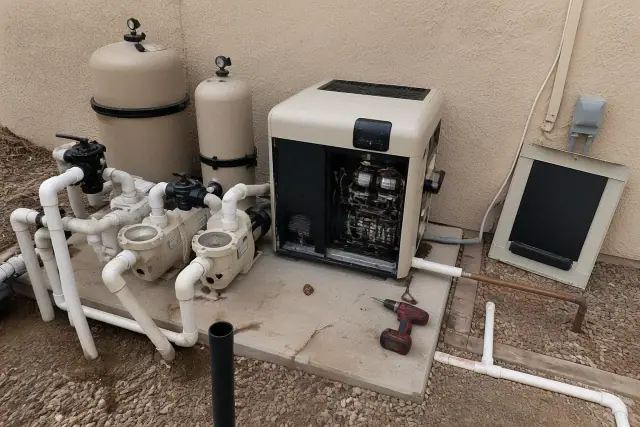
Technician repairing a pool heater with exposed wiring and plumbing pipes at a residential jobsite in Phoenix, AZ.

Overnight lows in the 40s can make a working heater important from December through February. We inspect ignition failures, thermostat sensor drift, dust-clogged gas burner assemblies, and hard-water scale in heat exchangers before comparing repair with replacement.

Request Estimate

Green Pool Cleanup

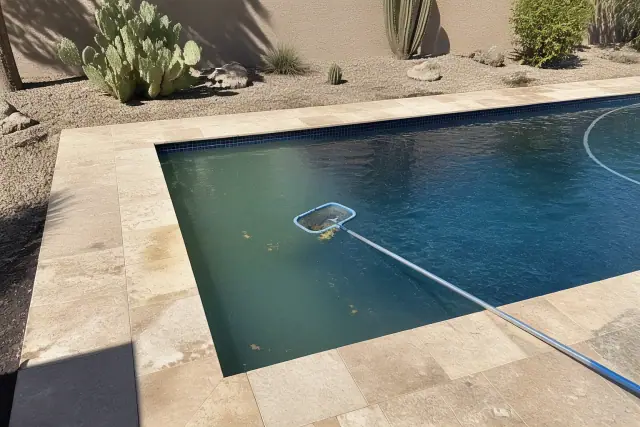
A worker skimming debris from a cleaning rectangular pool in Phoenix, AZ with desert landscaping in the background.

A pump failure, missed service, or phosphate-heavy monsoon runoff can let algae take hold within days. We brush surfaces, apply a heavy shock treatment, filter continuously, and rebalance pH, alkalinity, calcium hardness, and stabilizer; most cleanups clear in 24 to 72 hours and stabilize within a week.

Request Estimate

Pool Acid Wash and Tile Cleaning

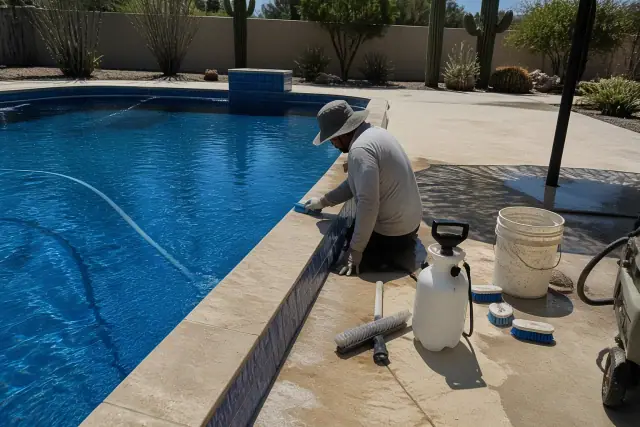
Contractor cleaning pool tiles and performing an acid wash on a backyard pool in Phoenix, AZ.

Mineral staining, algae marks, and calcium scale require a method matched to the surface. We use a controlled acid wash only on suitable drained plaster, while tile may be cleaned with pumice, non-acid products, or bead blasting based on scale severity and glaze type.

Request Estimate
Equipment and Surface Options

Pool Repair by Component and Condition

A clear symptom does not always identify the failed part. Reviewing the pump, filter, plumbing, heater, controls, water chemistry, and finish together helps isolate the actual cause and choose a repair suited to the equipment's age and condition.

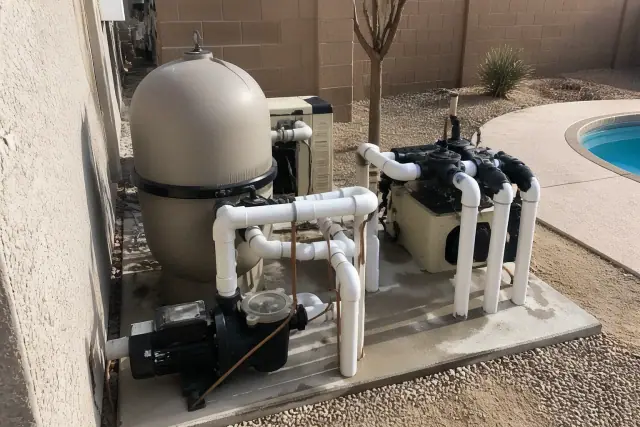
Pool filtration tanks, booster pumps, and PVC plumbing installed at a property in Phoenix, AZ.

Circulation and Pump Components

The correct circulation repair depends on pool gallonage, plumbing diameter, flow restriction, and component condition. When replacement is warranted, we size the pump instead of automatically matching the old horsepower, and we explain the energy-use difference between single-speed and variable-speed equipment.

  • Motor bearings and electrical capacitors
  • Shaft seals, O-rings, and pump leaks
  • Single-speed and variable-speed pumps
  • Valves, actuators, and automation controls
  • Suction lines, returns, and air intrusion
Request Estimate
Opened pool filter housing with grid cartridges in a sunny xeriscaped backyard in Phoenix, AZ.

Filter Cleaning and Media Service

Cartridge filters often need a thorough rinse and periodic degreasing every 4 to 8 weeks, while DE filters require backwashing plus grid teardown and sand filters follow a pressure-rise backwash schedule. Expected replacement intervals are typically 2-3 years for cartridges, 3-5 years for DE grids, and 5-7 years for sand media.

  • Cartridge rinsing and degreasing
  • DE backwashing and grid teardown
  • Sand-filter backwashing and media checks
  • Pressure-gauge and flow evaluation
  • Torn cartridge and collapsed-grid replacement
Request Estimate
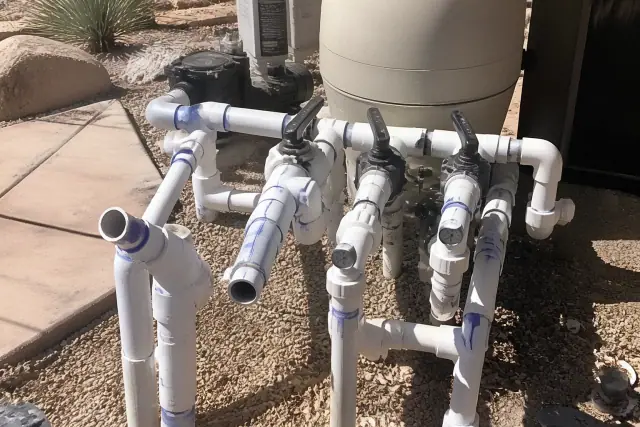
A pool plumbing manifold under repair with PVC pipes and gauges in Phoenix, AZ.

Leak Detection and Plumbing Repairs

Expansive desert clay can shift underground lines and stress fittings over time. We confirm that loss exceeds evaporation, pinpoint the likely path, and choose the least disruptive suitable repair for skimmers, light niches, below-grade plumbing, or structural cracks.

  • Bucket testing against normal evaporation
  • Dye testing around fittings and niches
  • Pressure testing on plumbing lines
  • Dive and electronic leak detection
  • Spot excavation, pipe repair, or rerouting
Request Estimate
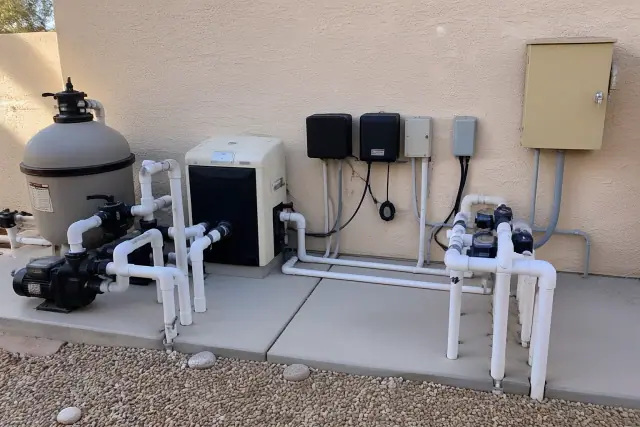
Pool heater, salt cell, and control panel installation on an equipment pad in Phoenix, AZ.

Heaters, Salt Cells, and Controls

A heater under 5 years old with a clean heat exchanger is usually worth repairing, while equipment past 8-10 years or with heat-exchanger corrosion may favor replacement. Heat-pump heaters can operate efficiently in Phoenix's mild winter air, and a pool cover helps reduce standby heat loss.

  • Gas-heater ignition and burner service
  • Thermostat sensor diagnostics
  • Heat-exchanger scale and corrosion checks
  • Salt-cell plate cleaning
  • Automation-controller and actuator troubleshooting
Request Estimate
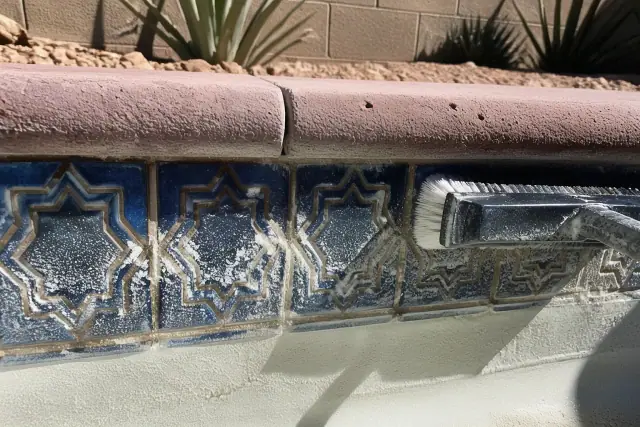
Contractor scrubbing calcium deposits from pool tiles in Phoenix, AZ.

Plaster, Tile, and Scale Cleaning

Keeping scale off tile and equipment can help a concrete pool reach its full 10-15 year resurfacing interval and protect a system that may cost $8,500 to $15,000 or more to resurface. An acid wash removes only a very thin plaster layer and is generally appropriate just once or twice over the surface's lifespan.

  • Pumice cleaning for suitable waterline tile
  • Non-acid tile cleaners for compatible scale
  • Bead blasting matched to glaze condition
  • Controlled acid washing on sound plaster
  • Neutralized runoff kept out of storm drains
Request Estimate
Repair Recommendations You Can Understand

Choosing the Right Pool Repair Approach

A useful estimate separates cleaning, repair, and replacement based on test results, component age, damage extent, and operating cost. We show the findings and explain the options before work begins so you can compare the immediate repair with the longer-term value of replacement.

Certified Pool Operators

Our technicians are Certified Pool Operators trained to Pool & Hot Tub Alliance standards. That training supports disciplined testing, water balancing, circulation review, and clear documentation for residential and regulated public pools.

Diagnostic-First Estimates

Pressure readings, flow measurements, and visual inspection come before the repair quote. The free estimate outlines the cost before a wrench touches the equipment and gives you both repair and replacement figures when either path may make sense.

Residential, HOA, and Commercial Pools

We work on backyard pools in Ahwatukee, Arcadia, and Paradise Valley as well as HOA and commercial facilities across the Valley. Larger accounts receive the same chemistry-first approach, scaled for higher gallonage and stricter compliance documentation.

Phoenix Pool Warning Signs

Pool Problems We Diagnose and Repair

Pool problems often reveal themselves through water loss, sound, pressure, flow, color, temperature, or scale. Because Phoenix heat can accelerate damage within hours or days, active leaks, electrical hazards, stopped pumps, and rapid green-outs deserve prompt attention.

Get a Free Repair Estimate

Leaks and Excess Water Loss

Summer evaporation of roughly a quarter-inch daily can be normal, but a skimmer crack, failed O-ring, or below-grade line can push loss higher. A leak losing even a half-inch beyond normal evaporation can waste thousands of gallons per month and force the pump to operate against a low water level.

Weak Circulation and Pump Noise

Grinding, screeching, humming without rotation, repeated breaker trips, air in the lines, and weak returns point toward pump or circulation trouble. Without flow, filtration stops and sanitizer cannot distribute evenly, allowing algae to take hold within days during summer.

High Filter Pressure and Cloudy Water

Dust, pollen, and monsoon debris can clog Valley filters quickly, raising pressure and reducing skimmer flow. Fine debris that recirculates immediately after cleaning can indicate a torn cartridge or collapsed DE grid rather than a chemistry problem alone.

Heater Ignition and Mineral Scale

Ignition failures, sensor drift, dust inside burner assemblies, and hard-water scale on heat exchangers can interrupt heating or reduce efficiency. Component age and internal corrosion determine whether a targeted repair or replacement is the better financial choice.

Green Water and Algae Blooms

Green water usually follows a circulation or sanitizer lapse, sometimes compounded by phosphates from fertilizer runoff and dust. Heavy algae and debris may require a partial drain and vacuum-to-waste before brushing, shock treatment, continuous filtration, and chemical rebalancing.

Calcium Scale and Worn Surfaces

Calcium carbonate collects along the waterline as evaporation and splash-out leave minerals behind. Heavy scale can etch grout and tile glaze, while widespread roughness, staining, or exposed aggregate may indicate that resurfacing will outperform repeated cleaning and patch repairs.

How It Works

Our Pool Repair Process

Our process moves from symptom confirmation to measurement, isolation, options, repair, and final testing. The goal is to find the failed component, explain the cost before work, and confirm that circulation and water chemistry are stable afterward.

01.

Confirm the Problem

We review water loss, sound, pressure, flow, breaker behavior, water color, heat, and visible scale. For suspected leaks, a bucket test first separates abnormal loss from ordinary Phoenix evaporation.

02.

Inspect and Measure

The technician checks pressure gauges, return flow, fittings, seals, filter condition, controls, and the equipment pad. Water testing covers chlorine, pH, alkalinity, calcium hardness, and stabilizer when chemistry or algae is involved.

03.

Isolate the Failed Component

Additional testing targets the suspected system, such as dye or line-pressure testing for a leak, electrical checks for a pump, or inspection of a heater's ignition and heat exchanger. This avoids treating a symptom while leaving the cause in place.

04.

Compare Repair and Replacement

We weigh equipment age, damage extent, repair cost, energy use, and the condition of related components. When both choices are practical, the free estimate shows the figures side by side so the decision remains yours.

05.

Complete the Repair Safely

Approved work is completed with attention to the plumbing, electrical, structural, and chemical conditions involved. Acid-wash runoff is neutralized and managed according to Arizona Department of Environmental Quality guidance rather than discharged to storm drains.

06.

Test Circulation and Water Balance

After the repair, we verify flow, pressure, leaks, equipment response, and relevant water-chemistry values. We then explain maintenance needs such as filter schedules, salt-cell cleaning, chemical service, or weekly pool care.

Free Pool Repair Estimate

Schedule a Pool Repair
Estimate

Tell us what you are seeing, hearing, or measuring, and we will schedule an equipment-pad walkthrough. You will receive the repair cost before work begins, with repair and replacement options explained when both are relevant.

Phoenix Pool Repair Help

Pool Repair FAQs

These answers cover common Phoenix questions about repair costs, service timing, leaks, equipment replacement, green water, filters, heaters, and pool surfaces. A site-specific diagnosis is still the best way to separate maintenance from repair or replacement.

Call Our Pool Experts

Costs vary by the failed component and repair scope. Filter cleaning or a minor valve repair may run $150-$300, while pump replacement typically runs $600-$1,400 depending on horsepower and whether the pump is single-speed or variable-speed; a free estimate provides the number before work starts.

Weekly service is standard during Phoenix heat and UV exposure, and a typical visit takes 60 to 90 minutes for skimming, vacuuming, brushing, chemistry balancing, and filter checks. Weekly pool service commonly runs $115-$200 per month depending on pool size and service level, while some covered or lightly used winter pools may shift to biweekly care.

Green water usually means chlorine fell too low after a circulation failure, missed service, or phosphate-heavy monsoon runoff. Brushing, heavy shock treatment, and continuous filtration clear most pools in 24 to 72 hours, although severe algae and debris may require a partial drain before treatment.

The decision depends on age, damage extent, operating cost, and the price difference between the two options. A pump or heater under 5 years old with an isolated failure is often worth repairing, while equipment past 8-10 years or with corroded internals may be more practical to replace.

Expansive desert clay can move underground plumbing and stress skimmer fittings, while UV exposure degrades above-grade fittings and O-rings. A bucket test confirms whether water loss exceeds normal evaporation before dye, pressure, dive, or electronic testing pinpoints the source.

A targeted repair is usually cheaper in the short term, but a concrete pool near the end of its 10-15 year plaster life can keep generating surface problems. Standard plaster resurfacing commonly ranges from $6,500-$9,000, while Pebble Tec finishes may run $10,000-$14,000; on otherwise sound plaster, an acid wash may buy a year or two before resurfacing.

Yes. We service backyard residential pools throughout the Valley along with HOA and commercial pools, with public facilities following Maricopa County Environmental Services requirements for chemistry logging and circulation standards.

A standard visit includes surface skimming, wall and tile-line brushing, floor vacuuming, basket emptying, chlorine, pH, and alkalinity testing, and a visual equipment check. Repair needs are flagged during the visit so leaks, noise, and pressure changes can be addressed before a larger failure.

Phoenix pools can lose roughly a quarter-inch or more per day to evaporation during peak summer. A bucket test compares water loss inside and outside the pool; loss beyond the evaporation baseline points toward a failed O-ring, skimmer crack, fitting, structural crack, or plumbing leak.

Cleaning follows filter type and pressure rise: cartridges may need rinsing and periodic degreasing every 4 to 8 weeks, while DE and sand units require backwashing on their appropriate schedules. Torn cartridges, collapsed DE grids, persistent cloudy return water, or media beyond its service interval can indicate replacement.

Grinding or screeching, a leaking shaft seal, a motor that hums without spinning, repeated breaker trips, air in the lines, and weak return flow all warrant diagnosis. Pressure readings well outside the normal 10-20 PSI range for a clean filter can also point to circulation or filtration trouble.

An isolated ignition, sensor, or burner problem on a heater under 5 years old is usually worth repairing when the heat exchanger is clean. Once equipment reaches 8-10 years or has heat-exchanger corrosion, replacement may make more financial sense than repeated repairs.

An acid wash may be appropriate after a full drain when otherwise sound plaster has stubborn gray, black, algae, or mineral staining that routine cleaning cannot remove. Because the process strips a very thin surface layer, it is generally used only once or twice over a plaster surface's lifespan and is not a substitute for resurfacing.