Proudly serving Phoenix, Scottsdale, Glendale, Mesa, Tempe, Chandler & surrounding areasCall or Text 24/7: 602-449-8063
Aerial view of a residential neighborhood with Saguaro cacti and stucco homes in Phoenix, AZ under a clear morning sky.

Pool Acid Wash for Calcium Scale & Stain Removal in Phoenix, AZ

Phoenix Expert Pool Service provides pool acid washing in Phoenix, along with pool tile cleaning, green pool cleanup, weekly pool service, pool cleaning, and pool chemical service. Our full-service pool care also includes pool repair, equipment repair, pump repair, and filter cleaning. We work on drained plaster, pebble, and quartz finishes with a measured, low-concentration muriatic acid process. Each recommendation starts with the surface condition rather than assuming every stained pool needs the same treatment.

Phoenix pools face five to seven months of triple-digit heat, intense UV exposure, and fast evaporation that concentrates calcium and total dissolved solids. That combination can leave surfaces dull, gray, streaked, or scaled even when routine water balance is under control. Our technicians adjust dilution and dwell time for the finish, protect decking, equipment, plants, and hardscape, and neutralize runoff after treatment. This controlled approach removes only the surface layer needed while reducing the risk of uneven etching or exposed aggregate.

We inspect the shell for hairline cracks, exposed aggregate, remaining thickness, and stain type before draining. You receive a written estimate that explains whether acid washing, tile cleaning, chemical service, or replastering is the better fit.

Phoenix Expert Pool Service provides pool acid washing throughout Phoenix and the roughly 5.19-million-resident Salt River Valley metro, including Scottsdale, Tempe, Mesa, Glendale, and Chandler.

★ ★ ★ ★ ★4.9/5 Average Rating · 20+ Years of Experience · Thousands of Customers Helped · Licensed & Insured · Residential & Commercial

Pool Acid Wash Options & Benefits

What Is a Pool Acid Wash?

An acid wash is a controlled chemical peel for a drained pool shell. Diluted muriatic acid strips away a thin top layer of plaster, pebble, or quartz finish to expose cleaner material beneath.

The process targets bonded calcium scale, mineral discoloration, and algae staining that brushing, tile cleaning, and standard chemical service can no longer remove. Because it physically removes material rather than simply cleaning the surface, it is reserved for finishes that can safely tolerate another strip.

On a suitable surface, acid washing can restore color and texture that years of sun and hard water have hidden. A fifteen-year-old plaster surface can often look close to new for a season or two before normal fading resumes, although the result depends on the shell's remaining condition.

Benefits of Professional Pool Acid Washing

A properly timed acid wash can refresh an aging pool while giving the technician a clear view of the drained shell. The value comes from matching the treatment to the finish, stain, and remaining surface condition.

  • Reveals cleaner plaster, pebble, or quartz beneath dull surface buildup
  • Removes embedded calcium scale and algae stains beyond routine brushing
  • Addresses gray, chalky, and blotchy discoloration from sun and hard water
  • Uses surface-specific dilution and dwell time for more even results
  • Pairs with waterline tile cleaning when calcium bonds to grout or glazing
  • Creates an opportunity to inspect the exposed shell and pool equipment
  • Allows fresh fill water to reset calcium hardness and total dissolved solids
  • Provides a cleaner baseline for balanced weekly chemical maintenance
Complete Pool Surface Care

Phoenix Pool Surface & Cleaning Services

A pool refresh may call for acid washing, targeted tile work, a drain and refill, water balancing, or equipment attention. We match the scope to what the surface and circulation system actually need.

Pool Acid Washing

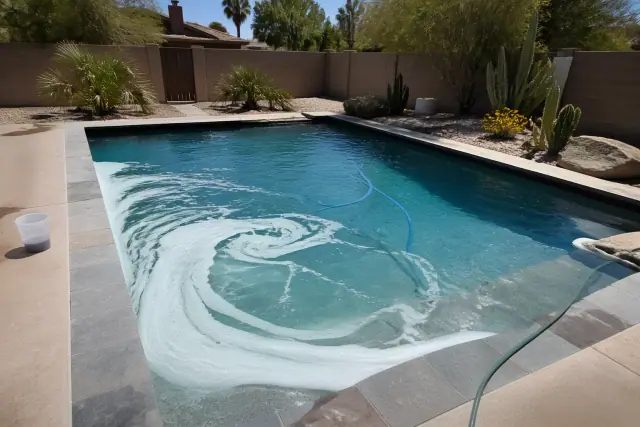
Pool acid wash in progress on a stained residential pool in Phoenix, AZ, showing treated plaster and desert landscaping.

A measured muriatic acid treatment removes a thin layer of scale, embedded staining, and mineral discoloration from a drained plaster, pebble, or quartz shell. Concentration and timing are adjusted to the finish rather than applied on a fixed timer.

Request Estimate

Pool Tile Cleaning

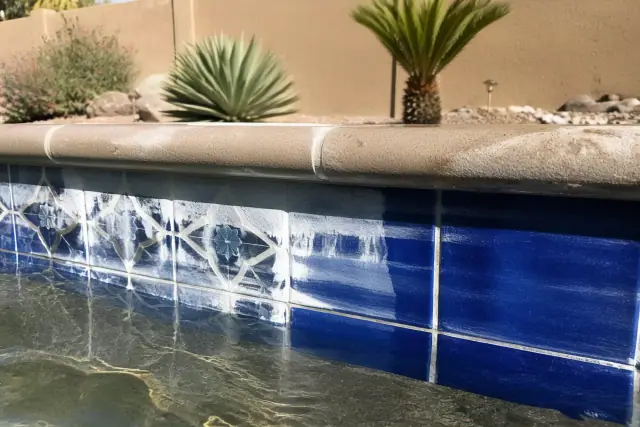
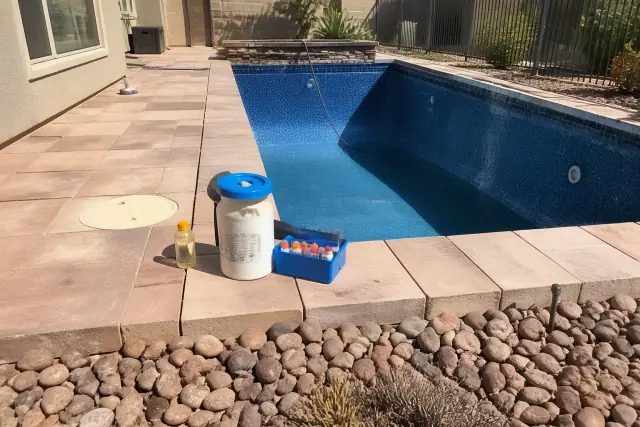
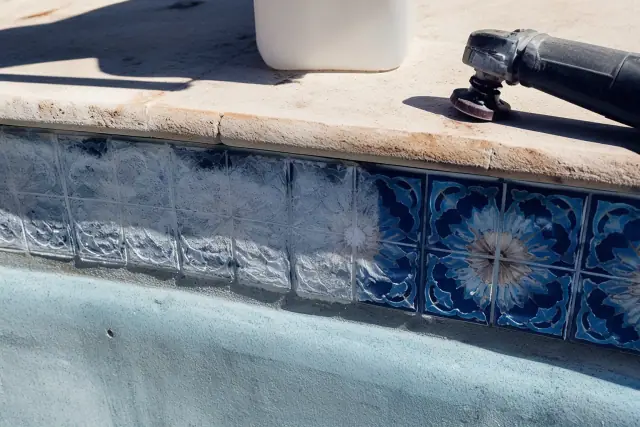
Cleaning mineral deposits from pool waterline tiles at a residential backyard in Phoenix, AZ.

Waterline calcium is treated with pumice stones, acid-safe tile cleaners, or a controlled acid soak when deposits are stubborn. The method is selected to protect grout and glazing while lifting scale baked on at Phoenix's evaporation line.

Request Estimate

Green Pool Cleanup

Contractor performing a green pool cleanup and acid wash at a residential backyard pool in Phoenix, AZ.

Green pool cleanup addresses neglected water and the algae conditions behind it. When black algae or pink slime has rooted into porous plaster or pebble deeply enough that shock treatment cannot clear the staining, an acid wash may be part of the solution.

Request Estimate

Pool Drain and Refill Service

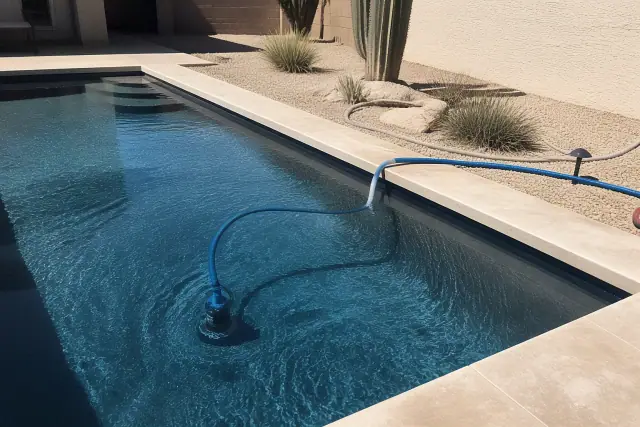
Submersible pump draining a residential swimming pool for an acid wash in Phoenix, AZ.

Draining creates access to the shell for acid washing and lets mineral-saturated water be replaced with fresh fill water. The refill resets total dissolved solids and calcium hardness to a more manageable baseline before final balancing.

Request Estimate

Weekly Pool and Chemical Service

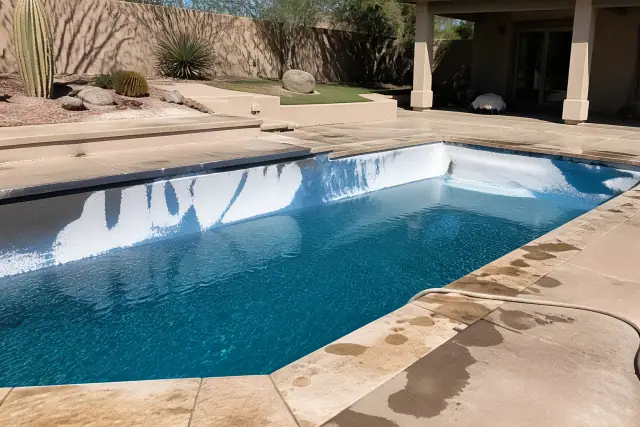
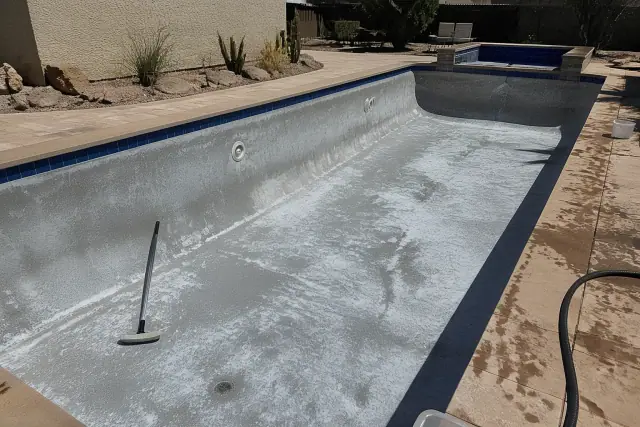
A partially drained swimming pool undergoing an acid wash service in a Phoenix, AZ backyard.

Between drains, weekly pool service and chemical service keep calcium hardness, total dissolved solids, and pH in balance. Consistent water care slows scale formation and helps the refreshed surface stay presentable longer.

Request Estimate

Pool Equipment Inspection and Repair

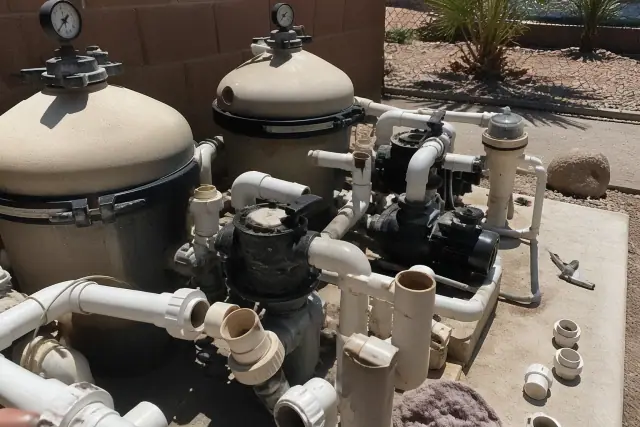
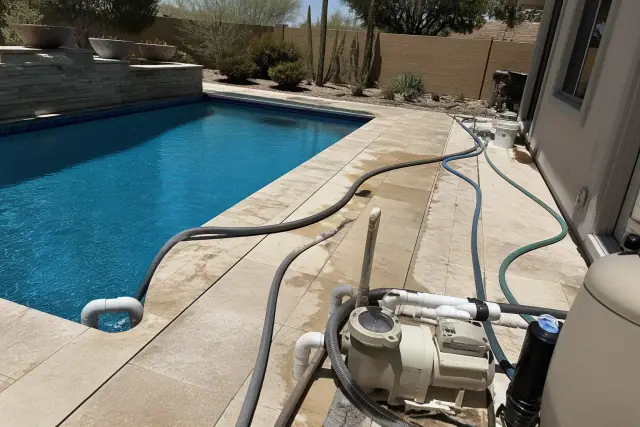
Pool equipment inspection and repair with plumbing work on a concrete slab in a Phoenix, AZ backyard.

An empty pool makes it easier to inspect pumps, filters, and visible plumbing concerns that may accompany long-neglected water. Phoenix Expert Pool Service also handles pool repair, pool equipment repair, pump repair, and filter cleaning when the inspection identifies related needs.

Request Estimate
Surface-Matched Treatments

Pool Acid Wash Treatment Options

The right treatment depends on the finish material, remaining thickness, stain type, and condition of the waterline. These options let the crew address the problem without using one acid concentration or dwell time across every pool.

Residential swimming pool in Phoenix, AZ after a standard plaster acid wash showing cleaned surfaces and desert landscaping.

Standard Plaster Acid Wash

Standard white and colored plaster can regain much of its original tone and smoothness after a controlled acid wash. We check thickness first because a surface with less than 1/8 inch of remaining plaster is often better served by replastering than another acid strip.

  • Best suited to standard white or colored plaster in sound condition
  • Aims to restore more of the original tone and smoothness
  • Uses a dilution and dwell time calibrated for plaster
  • Includes checks for hairline cracks and prior surface loss
  • Defers to replastering when the remaining finish is too thin
Request Estimate
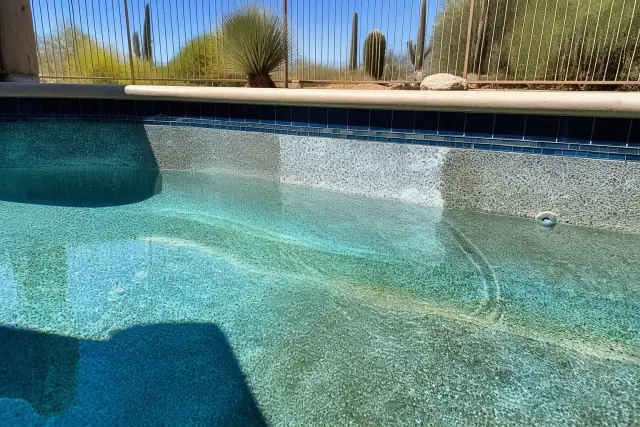
Acid-washed pebble and quartz pool surface in Phoenix, AZ, showing cleaning progress with cacti in the background.

Pebble and Quartz Surface Treatment

Pebble and quartz aggregate need a lighter acid concentration and shorter dwell time than plaster. Careful timing helps prevent over-etching that can expose or loosen the aggregate stones.

  • Uses a lower acid concentration than standard plaster work
  • Limits dwell time to protect exposed aggregate
  • Monitors pebble stones for loosening as the surface reacts
  • Adapts brush agitation to the texture of the finish
  • Considers chlorine washing when a milder treatment fits the aggregate
Request Estimate
Close-up of mineral deposits being cleaned from pool tiles during an acid wash service in Phoenix, AZ.

Waterline Calcium Removal

Waterline tile sits where Phoenix evaporation concentrates calcium and bakes it onto the surface. Pumice, acid-safe cleaners, and controlled soaking can remove bonded deposits without treating the entire shell more aggressively than needed.

  • Targets calcium at the pool's evaporation line
  • Works deposits away from tile grout and glazing
  • Uses pumice stones on suitable tile surfaces
  • Applies acid-safe tile cleaners where appropriate
  • Uses a controlled acid soak for deposits hardened beyond a season
Request Estimate
A contractor performing a stain-specific surface treatment on a pool in Phoenix, AZ, with surrounding desert landscaping.

Stain-Specific Surface Treatment

Iron, copper, rust, leaf debris, and embedded algae do not respond the same way to acid. Identifying the stain first helps set the concentration and dwell time without over-etching the shell to force out the wrong discoloration.

  • Evaluates iron or copper staining associated with well water
  • Separates rust marks from old equipment from mineral scale
  • Accounts for organic staining from leaves and debris
  • Checks the depth of black algae or pink slime staining
  • Matches acid strength and dwell time to the identified stain
Request Estimate
A swimming pool undergoing a drain, refill, and water rebalancing service in a residential backyard in Phoenix, AZ.

Drain, Refill, and Water Rebalancing

Because the shell must be drained for an acid wash, the visit can also replace old, mineral-saturated water. Fresh fill water resets calcium hardness and total dissolved solids before pH, chlorine, and calcium are balanced for swimming.

  • Fully drains the pool before acid application begins
  • Uses submersible pumps to manage rinse water and runoff
  • Accounts for the typical 3 to 6 inches of water-level change during the wash stage before full refill
  • Refills with fresh water to reset the mineral baseline
  • Checks pH, chlorine, and calcium hardness before swimming
Request Estimate
Finding Your Right Fit

Choosing the Right Surface Restoration Approach

The decision starts with the finish, stain depth, remaining material, hairline cracks, exposed aggregate, water chemistry, and prior wash history. Tile cleaning or chemical service may be enough for surface buildup, chlorine washing may suit a pebble or exposed-aggregate finish that needs a milder treatment, and replastering is safer when the shell is too thin for another strip.

Surface-Specific Acid Control

Plaster, pebble, and quartz do not react to muriatic acid in the same way. Technicians adjust dilution, agitation, and dwell time while reading the shell as it changes, stopping before the treatment removes more finish than needed.

Protected Property and Managed Runoff

Decking, coping, equipment, plants, turf, and hardscape are protected before acid application. Acid-rated gloves, eye protection, respirators, and submersible pumps support runoff management in line with Arizona Department of Environmental Quality guidance and Maricopa County Environmental Services requirements.

Inspection and Written Estimate

An in-person assessment checks the finish, hairline cracks, exposed aggregate, stain type, water chemistry, and drain-and-refill logistics. Phoenix Expert Pool Service then provides a written estimate before any acid touches the shell, including recommended tile or equipment work when relevant.

Controlled Work From Start to Finish

Why Choose Us for Phoenix Pool Acid Washing?

Phoenix Expert Pool Service brings experience from residential backyards in Ahwatukee and Paradise Valley as well as community and HOA pools across the metro area. Our technicians carry the licensing required for pool service work in Arizona, follow Arizona Registrar of Contractors standards, and apply Certified Pool Operator training principles from the Pool & Hot Tub Alliance to chemical handling and water safety. We test calcium hardness, total dissolved solids, and pH before draining, then walk you through the finished surface before the job is complete.

Request a Free Estimate

Calcium Scale and High TDS

Phoenix's hard water and rapid evaporation concentrate calcium hardness and total dissolved solids faster than in milder climates. The result can be scale across plaster, tile grout lines, and pebble surfaces that routine brushing no longer lifts.

Deep Algae Staining

Black algae and pink slime can root into porous plaster or pebble deeply enough that chemical shock does not fully clear the marks. A suitable acid wash strips the surface layer where those stains have anchored.

Metal, Rust, and Organic Stains

Iron or copper from well water, rust from old equipment, and organic debris leave different kinds of discoloration. Testing and visual identification help determine whether acid, tile cleaning, or another approach can address the stain without excessive etching.

Dull or Blotchy Pool Finishes

Years of intense sun and hard water can leave plaster gray, chalky, streaked, or blotchy even when the water is balanced. Removing the affected top layer can reveal more of the original color and texture on a sound surface.

Thin or Previously Washed Surfaces

Every acid wash removes material, so prior wash history and remaining thickness matter. Most plaster and pebble finishes can safely handle only one to two acid washes over their lifetime before replastering becomes the safer recommendation.

Neglected Water and Equipment Issues

Pools that have gone several years without attention may need more than surface treatment. Once the water is gone and the shell is visible, pump, filter, plumbing, or green-pool concerns can be inspected and addressed as part of the recommended scope.

Measured Surface Restoration

Our Pool Acid Wash Process

A consistent sequence keeps the acid moving evenly across the shell while protecting the surrounding property. The crew assesses the finish, drains and prepares the pool, removes loose material, treats the surface in sections, neutralizes the acid, and balances the refill water.

01.

Inspect the Surface and Test the Water

We identify the finish and stain type, check for hairline cracks, exposed aggregate, remaining thickness, and prior washes, and test calcium hardness, total dissolved solids, and pH. That information determines whether acid washing is appropriate and how the treatment should be sequenced.

02.

Drain the Pool and Protect the Property

The pool is drained completely, and decking, coping, equipment, plants, turf, and hardscape are protected before acid reaches the shell. Submersible pumps are positioned to keep runoff from pooling against the surrounding area.

03.

Pressure Wash Loose Debris

Pressure washing removes loose debris and algae before chemical treatment. Starting with a cleared surface makes the staining and scale easier to read as the acid is applied.

04.

Apply and Agitate Diluted Acid

Diluted muriatic acid is applied in sections from the bottom upward and agitated with acid brushes to lift embedded staining. Concentration and dwell time are adjusted as the plaster, pebble, or quartz surface responds.

05.

Neutralize and Flush the Shell

A soda ash or baking soda rinse neutralizes the treated surface. The shell is then flushed while runoff is managed so residual acid does not remain against the pool or surrounding property.

06.

Refill and Rebalance the Water

Fresh water refills the pool after the shell is clean and neutralized. We check pH, chlorine, and calcium hardness and give the go-ahead to swim only after the new water is properly balanced.

Plan Your Pool Refresh

Schedule a Pool Acid Wash
Estimate

Schedule an in-person inspection to find out whether your Phoenix pool needs a full acid wash, targeted tile cleaning, a drain and refill, or another surface solution. We will explain the recommended scope and provide a written estimate before acid touches the shell.

Phoenix Pool Surface Help

Pool Acid Wash FAQs

These answers cover acid-wash timing, cost, surface safety, treatment choices, and what to expect before swimming again. A surface and water assessment is still the right way to decide what your specific Phoenix pool needs.

Call About Acid Washing

Phoenix Expert Pool Service generally recommends draining and evaluating the surface every 5 to 7 years, when calcium hardness and total dissolved solids often make a full drain worthwhile. Heavy staining, visible scale, or an algae history may justify an earlier evaluation. Consistent chemical service can help a sound finish go longer between washes. We test the water and inspect the shell before recommending the treatment.

Most plaster and pebble surfaces can safely handle acid washing one to two times over their lifetime because every treatment removes a thin layer. We check thickness and prior wash history before agreeing to another strip. After two washes, replastering is usually safer than risking exposed rebar or gunite.

A standard residential acid wash typically takes three to five hours of hands-on work after the pool is drained. Pressure washing, acid application, agitation, neutralizing, and rinsing are included in that window. Draining and refilling can add a full day or more depending on pool size and the water source, and pebble or quartz may take longer because timing is more careful.

An acid wash always changes the surface because removing a thin top layer is how it strips scale and staining. Correct dilution and dwell time keep that removal controlled for the specific finish. Poor application can cause permanent etching, uneven texture, or exposed aggregate, which is why the shell must be inspected first.

Acid washing strips a layer of scale and staining from plaster, pebble, or quartz, while chlorine washing is typically a milder option for pebble or exposed aggregate. Neither is universally better. The finish material and depth of staining determine which process is appropriate.

Phoenix-market pricing generally runs from $200 to $450 for a standard residential pool. Drain and refill may be billed separately at $50 to $300 depending on pool size and water-hauling needs. Nationally, costs range from about $120 to $1,500, averaging near $450, or roughly $0.56 to $0.68 per square foot. Pool size, finish, stain severity, logistics, and bundled tile cleaning affect the written estimate.

Most pools are swimmable the same day the refill finishes or within a day, provided the water is balanced. Refill time depends on the water source and pool volume. We check pH, chlorine, and calcium hardness before giving the go-ahead.

Gray, chalky, blotchy, or streaked finishes, bonded calcium scale, and algae stains that remain after brushing or chemical treatment can justify an evaluation. These symptoms do not automatically mean the pool needs a full strip. Tile cleaning, chemical service, or replastering may fit better after inspection.

The service described here is used on plaster, pebble, and quartz finishes that have enough sound material remaining. Standard plaster tolerates a different concentration and dwell time than pebble or quartz aggregate. Thickness, cracks, exposed aggregate, and prior wash history must be checked before treatment.

The pool is drained, pressure washed, treated in sections with diluted muriatic acid, agitated with acid brushes, neutralized with soda ash or baking soda, and flushed. Property protection and runoff management are set up before treatment. The clean shell is then refilled, and the new water is balanced.

The pool must be fully drained before acid can be applied to the shell, but drain-and-refill logistics may be priced separately. Pool size, water source, and water-hauling needs affect that part of the scope. The written estimate identifies what is included before work begins.

Yes, tile cleaning is often considered during the same visit because waterline calcium and shell buildup are related Phoenix hard-water problems. Pumice, acid-safe tile cleaners, or a controlled soak may be used based on the tile, grout, glazing, and deposit severity. Bundling tile work can affect the final estimate.

Calcium, iron, copper, rust, leaves, and embedded algae respond differently to concentration and dwell time. Identifying the source helps the technician choose the right approach instead of over-etching the pool while trying to force out a stain. It also reveals when tile cleaning or another treatment is more appropriate.