Weekly Pool Service
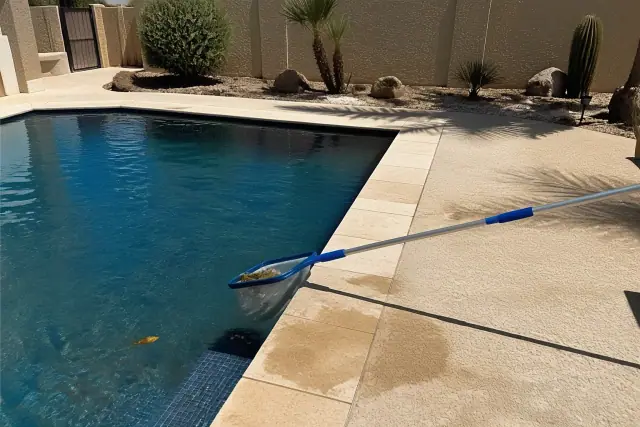
Weekly visits include skimming, brushing, vacuuming, basket care, and water testing. We check pH, free chlorine, alkalinity, and calcium hardness, adjust on site, and record the results. Explore Service
Explore Service
Phoenix Expert Pool Service provides weekly pool service for homeowners, property managers, and commercial properties throughout Peoria. Our work includes pool cleaning, pool repair, pool equipment repair, pool pump repair, and pool filter cleaning. We also handle green pool cleanup, pool acid washing, pool tile cleaning, and pool chemical service. The service plan is built for Sonoran Desert conditions, where uncovered pool-water surface temperatures routinely climb past 90?F.
Peoria summer highs regularly exceed 110?F, and pool water can reach the mid-90s by late afternoon. Intense UV speeds chlorine loss, while high evaporation and hard water raise the risk of scale and chemical drift. From June through September, monsoon dust and sudden downpours can load an uncovered pool with debris in a single afternoon. Consistent testing, cleaning, and equipment checks help catch those changes before the water turns cloudy or green.
Routes cover Vistancia, Trilogy at Vistancia, Westwing Mountain, Fletcher Heights, Arrowhead Ranch, Terramar, Sunrise Mountain, Old Town Peoria, and supported West Valley communities. Call to discuss your pool's condition, equipment, and service schedule.
Residential and commercial customers can use one team for routine cleaning, chemistry, repairs, and equipment care. Peoria routes cover Vistancia, Trilogy at Vistancia, Westwing Mountain, Fletcher Heights, Arrowhead Ranch, Terramar, Sunrise Mountain, Old Town Peoria, and the area around the Peoria Sports Complex. Peoria has grown past 190,000 residents, and daily routes extend through the supported West Valley service area. Property owners who also need service information for Paradise Valley, AZ can review that location page.
Weekly visits include skimming, brushing, vacuuming, basket care, and water testing. We check pH, free chlorine, alkalinity, and calcium hardness, adjust on site, and record the results. Explore Service
Explore Service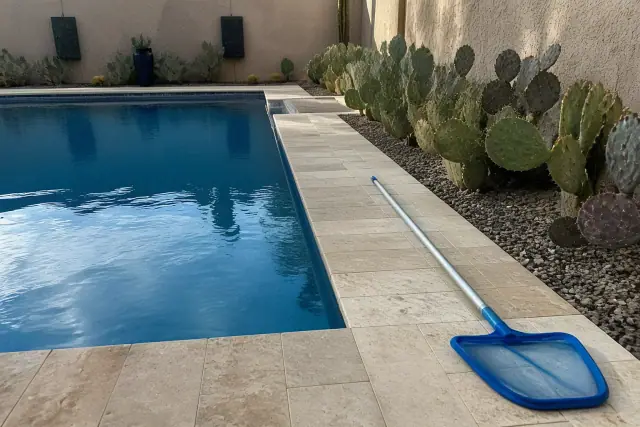
Mechanical cleaning removes surface debris, brushes walls and steps, and vacuums settled grit before it feeds algae or clouds the water. The routine is adjusted after heavy tree debris, dust storms, or sudden downpours. Explore Service
Explore Service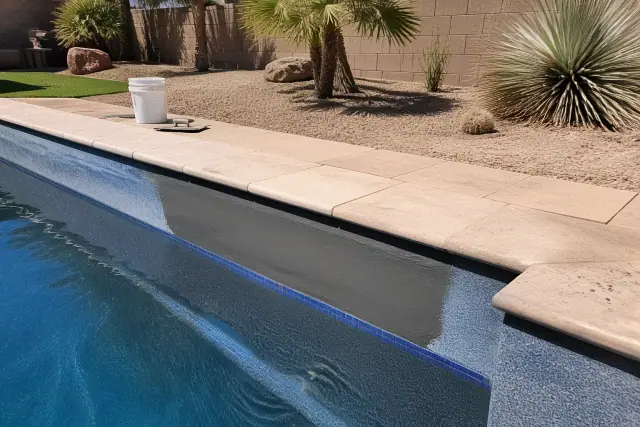
On-site diagnosis covers cracked plaster, failing skimmers, broken returns, and deteriorating deck seals. The technician explains repair options before work begins, whether the appropriate response is a plaster patch or a full skimmer replacement. Explore Service
Explore Service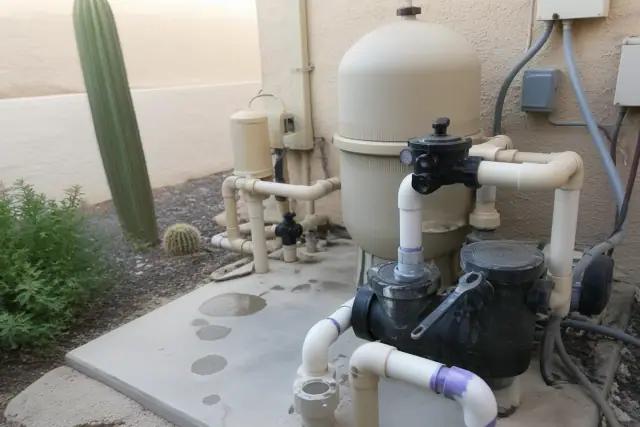
Equipment troubleshooting covers pumps, heaters, salt chlorine generators, and automation systems. Common seal kits, capacitors, and gaskets are carried on service trucks to reduce return trips when the needed part is available.
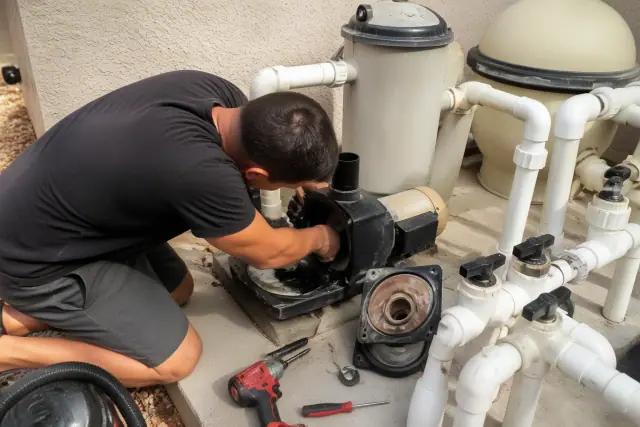
Pump care includes a visual inspection of seals and electrical connections during routine visits. A slow-draining skimmer, louder-than-normal operation, leaks, or circulation changes are documented so the pump can be evaluated before the problem spreads.
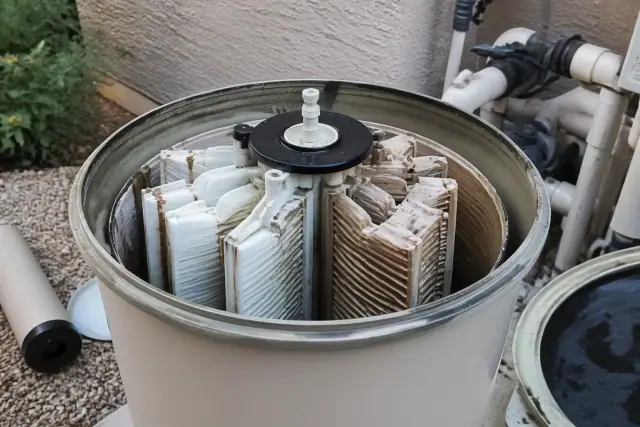
Cartridge, DE, and sand filters are disassembled, deep cleaned, and inspected for damaged media or housings. Finding cracked laterals or torn cartridges early helps address the cause of cloudy water instead of treating the symptom alone.
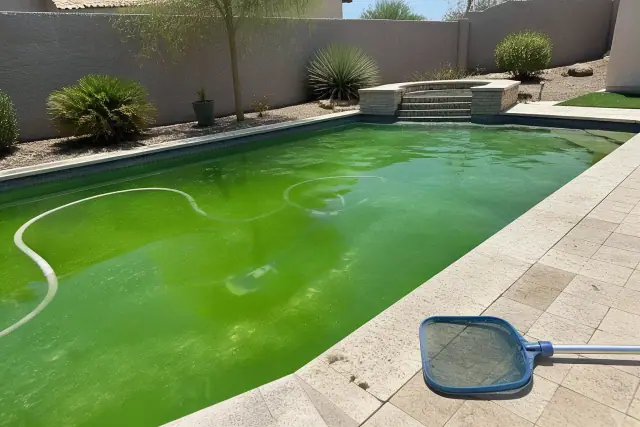
When air temperatures climb above 100?F, a vacant home, long trip, or equipment failure can turn pool water green within days. Cleanup combines shocking, surface brushing, and filtration and typically takes one to three days, depending on severity.
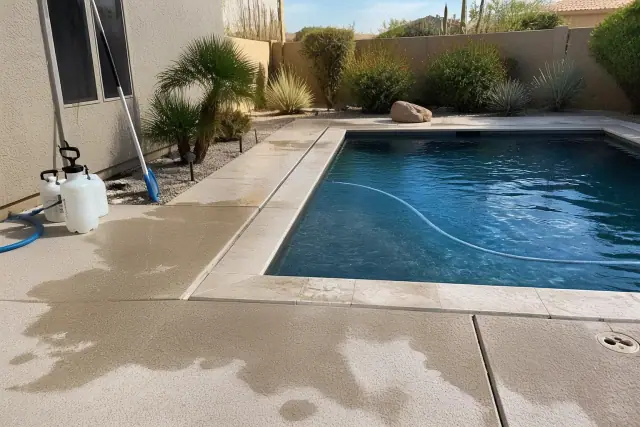
A controlled muriatic acid wash can remove scale and light staining that leave plaster dull after a few years in hard water. The service is followed by restart and water rebalancing.
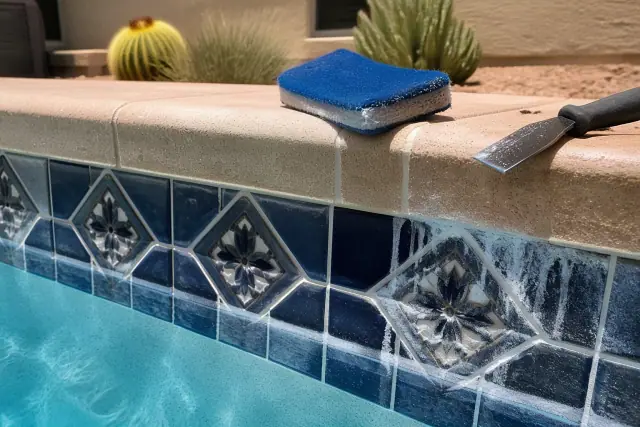
Waterline calcium is removed with a tile-safe method selected for glass, ceramic, or stone. Matching the method to the surface helps protect grout and glazing while addressing visible buildup.
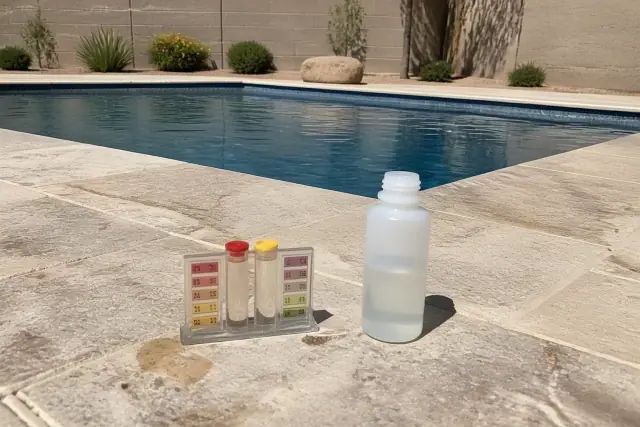
Chemical service targets pH between 7.4 and 7.6 and free chlorine between 1 and 3 ppm while monitoring alkalinity, calcium hardness, and cyanuric acid. Every reading is logged to create a documented chemistry history.
The right plan depends on pool size, equipment age, filter type, surrounding landscaping, use, and current water condition. Most residential pools do well with once-a-week service; heavy-use homes, HOA pools, and commercial properties may need twice-weekly visits during the hottest June-through-September stretch. We evaluate the pool instead of forcing every account into the same frequency.
A once-a-week schedule fits most Peoria residential pools. Heavy use, overhanging trees, or recurring chemistry issues may justify more frequent visits during peak heat.
Choose service that tests with a reliable method, adjusts chemistry on site, and records the readings. A documented history makes changes in pH, chlorine, alkalinity, and hardness easier to follow.
Pool size and the age and condition of the pump, heater, salt system, or automation equipment affect both service needs and pricing. Routine visual checks can reveal worn seals, electrical concerns, or abnormal operation.
Cartridge, DE, and sand filters require different cleaning methods. Peoria dust storms can load any of them quickly, so the plan should reflect the actual media and debris burden.
Tree cover, exposed desert lots, and monsoon debris change how much skimming, brushing, vacuuming, and filter care a pool needs. The surrounding property matters as much as the water's appearance.
Backyard pools, HOA amenities, and commercial pools have different surface areas and bather loads. Service frequency should match how the pool is used instead of relying on a single package for every property.
Desert heat, intense UV, hard source water, and monsoon debris create related problems across pool chemistry, surfaces, filters, and equipment. Identifying the underlying condition helps determine whether the pool needs routine correction, deeper cleaning, or repair.
Request Pool AssessmentA Peoria pool can shift from clear to green after two to three weeks without attention in July. Algae accelerates once free chlorine falls below the 1 ppm threshold.
Warm water and intense sun speed chemical breakdown and algae growth. After a lapse in circulation or service, visible green water can develop within days during extreme heat.
Monsoon dust, pollen, and silt can overwhelm filter media and leave the pool cloudy. Baskets, circulation, and the filter itself all need to be checked rather than adding chemicals alone.
Central Arizona's hard water leaves calcium scale on tile and plaster and can dull a pool surface over time. Waterline cleaning or an appropriate plaster treatment addresses different kinds of buildup.
Longer pump run times and UV exposure can degrade seals, o-rings, and electrical components faster than in milder climates. Repair costs for neglected equipment commonly fall between 228 and 583 dollars per incident.
Water supplied largely through the Central Arizona Project and Salt River Project systems runs high in calcium and dissolved solids. That chemistry narrows the margin for error and makes consistent testing important.
Our technicians are trained on Arizona-specific chemistry and company safety protocols, and they work toward Certified Pool Operator credentials through the Pool & Hot Tub Alliance. Phoenix Expert Pool Service operates as a licensed and insured pool service company and stays familiar with Arizona Registrar of Contractors requirements for repair and equipment work. For shared and commercial pools, the team also understands the water-quality expectations associated with Maricopa County Environmental Services oversight.
The team has worked with newer pools in Vistancia, older plaster pools near Old Town Peoria, residential backyards, and HOA amenities across the West Valley. That local context informs chemistry, cleaning, and equipment recommendations.
When equipment or a pool surface needs more than routine service, the technician explains the issue and available options before work begins. Recommendations are tied to what was found on site.
Crews receive chemical-logging and safety training before running a route solo. The company is licensed and insured, and technicians continue working toward industry credentials through the Pool & Hot Tub Alliance.
A standard residential visit typically takes 15 to 30 minutes, depending on pool size, water condition, and accumulated debris. Technicians follow the same core sequence while taking additional time for heavy tree cover, recent dust storms, or chemistry problems.
The visit begins with a visual check of the water, pool surfaces, and equipment pad. The technician looks for leaks, unusual pump noise, circulation changes, and other visible concerns.
Surface debris is skimmed, walls and steps are brushed, and settled material is vacuumed from the floor. Mechanical cleaning removes the material that chemicals alone cannot address.
A digital reagent test measures the water before adjustments are made. Chlorine, pH, alkalinity, and other relevant readings are evaluated against the pool's current condition.
Chemistry is adjusted during the visit based on the test results. Cyanuric acid and calcium hardness are monitored when they affect chlorine protection, scale, or overall balance.
Filter baskets are emptied and rinsed every visit. A slow-draining skimmer or circulation change is noted so the filter, pump, or plumbing can be evaluated.
Readings and unusual conditions are added to the service report. The visit frequency can be adjusted seasonally to reflect heat, use, landscaping, and property type.
Case Study 1: Weekly Care: Regular skimming, brushing, vacuuming, chemistry testing, and basket care help keep the water swim-ready while creating a record of changing conditions.
Case Study 2: Green Pool Recovery: When algae takes over, coordinated shocking, brushing, and filtration can restore clarity, typically over one to three days depending on severity.
Case Study 3: Equipment Protection: Visual checks can surface pump noise, failing seals, clogged filters, and circulation changes before they cause a larger water-quality problem.
Tell us about your pool size, equipment, current water condition, landscaping, and how the property is used. Phoenix Expert Pool Service can use those details to discuss an appropriate schedule and the factors that shape your quote.
These answers cover pricing, visit frequency, chemistry, cleaning, equipment, and seasonal care for Peoria pools. Call if your pool's condition or property use requires a more specific recommendation.
Call Our Pool TeamWeekly maintenance for a standard residential pool in the Peoria area generally costs between 80 and 150 dollars per month, or roughly 1,000 to 1,800 dollars annually. Larger pools, saltwater systems, and pools needing extra chemical correction during peak summer tend toward the higher end, so quotes are based on actual size, equipment, and condition.
Yes. A pool left untreated for even two weeks in summer can move from balanced to green as heat speeds chlorine loss and algae growth, while weekly visits can catch a failing pump seal or clogged filter before it creates a larger problem.
A standard residential visit typically takes 15 to 30 minutes, depending on pool size, water condition, and debris. Heavy tree cover, a recent dust storm, or a chemical imbalance can require more time, and commercial or community pools take longer because of greater surface area and bather load.
Effective care combines water testing, chemical adjustment, skimming, brushing, vacuuming, basket cleaning, and regular filter maintenance. During summer, running the pump about 8 to 12 hours each day generally provides the circulation needed for Arizona's heat load.
Most residential pools do well with once-a-week service. Pools with heavy use, overhanging trees, persistent chemistry issues, or commercial and HOA bather loads may need twice-weekly visits during the hottest months.
Yes. Seasonal transition service for part-time and snowbird residents can include rebalancing the water, inspecting equipment that has been idle, and addressing scale, staining, or algae before the pool returns to normal use.
Weekly testing covers pH, free chlorine, alkalinity, and calcium hardness, with cyanuric acid monitored as needed. The service targets pH between 7.4 and 7.6 and free chlorine between 1 and 3 ppm, then logs the results.
Yes. Service can include disassembly, deep cleaning, and inspection of cartridge, DE, or sand filter media and housings, including checks for torn cartridges or cracked laterals that can contribute to cloudy water.
Green pool cleanup typically takes one to three days, depending on severity. The process combines shocking the water, brushing algae from the surfaces, and filtering the pool back toward clear.
Monsoon season usually runs from June through September, and one storm can add silt and organic debris in a single afternoon. The pool may need surface skimming, basket and filter attention, brushing or vacuuming, and fresh chemistry testing before normal operation resumes.
Equipment service covers pumps, heaters, salt chlorine generators, and automation systems. Technicians troubleshoot the cause and may use common seal kits, capacitors, or gaskets when those parts match the repair.
Waterline buildup is treated with a tile-safe method selected for glass, ceramic, or stone. For plaster with scale or light staining, a controlled acid wash may be appropriate, followed by pool restart and water rebalancing.
Routes cover Vistancia, Trilogy at Vistancia, Westwing Mountain, Fletcher Heights, Arrowhead Ranch, Terramar, Sunrise Mountain, Old Town Peoria, and the Peoria Sports Complex area. Supported nearby communities include Glendale, Surprise, Sun City, Sun City West, El Mirage, Youngtown, and northern Phoenix.
Yes. Commercial properties and HOA community pools are part of the supported service scope, and their larger surface areas and higher bather loads may require more frequent visits than a typical residential pool.
Pricing depends on pool size, equipment age and condition, water condition, service frequency, saltwater equipment, chemical correction needs, surrounding landscaping, and property use. The quote is based on the actual pool rather than a single flat package.