4-8 Cleanings a Year
That is the practical annual range for most Phoenix pools before filter type, use, dust, and debris move the schedule higher or lower.
Phoenix Expert Pool Service recommends that most Phoenix pools have their filter cleaned 4 to 8 times a year, with the exact schedule set by filter type, pool use, desert dust, monsoon debris, and pressure-gauge readings. The right interval protects water flow and keeps the pump from working harder against a loaded filter.
That is the practical annual range for most Phoenix pools before filter type, use, dust, and debris move the schedule higher or lower.
Record the gauge reading immediately after cleaning, then clean again when pressure climbs 8-10 PSI above that baseline.
Cartridge filters need rinsing, DE filters combine backwashing with periodic teardown, and sand filters rely on backwashing plus deeper media service.
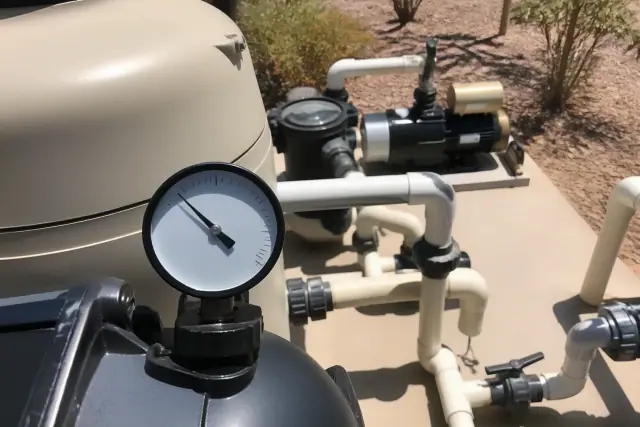
A clear gauge photo taken just after cleaning preserves the baseline needed to recognize an 8-10 PSI rise later.
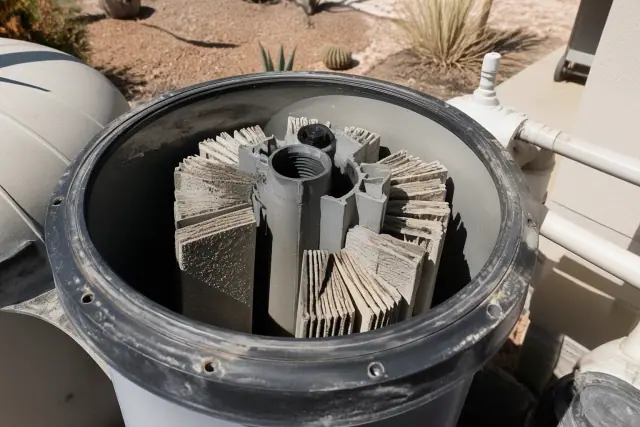
Fine desert particles can lodge deep in pleats within days of a haboob, showing why a calendar alone can miss the right cleaning time.
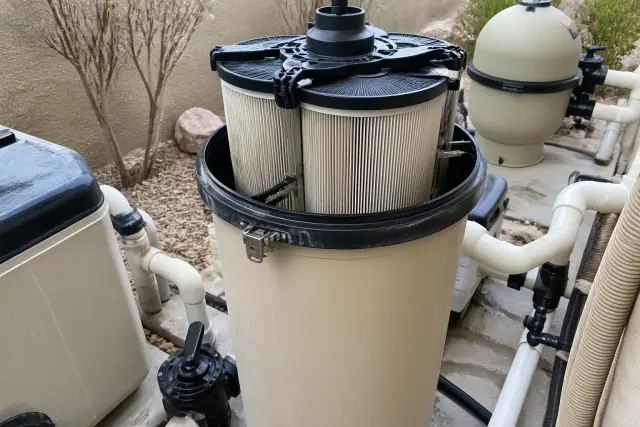
A side-by-side view makes it clear why cartridges are rinsed, DE grids are recharged, and sand tanks are backwashed.
Rinse every 4-6 weeks, for a minimum of about 6-8 cleanings a year in Phoenix conditions, and use a full cleaning-solution soak 2-4 times a year. Cartridge elements typically last 2-5 years with consistent care.
Backwash every 4-8 weeks as conditions require, then complete a full grid inspection and fresh-media recharge 2 times a year. DE grids typically last 5-7 years.
Backwash every 2-4 weeks and plan a deeper media rinse once or twice annually. Sand media commonly lasts 7-10 years before full replacement.
Use the shorter end of each range during June through September, after dust storms, or when frequent swimming, children, pets, or rental turnover add more debris.
| What You Notice | What It Suggests | Practical Action |
|---|---|---|
| Pressure is 8-10 PSI above the clean baseline | The filter is loaded enough to restrict normal flow. | Clean the cartridge or backwash the DE or sand filter. |
| A haboob or heavy swimming adds a sudden load | Fine dust and organic debris can shorten the normal interval. | Recheck pressure and use the shorter end of the schedule. |
| Oil or calcium scale remains after a hose rinse | A surface rinse is not removing the deeper buildup. | Use the appropriate deeper cartridge-cleaning process. |
| Flow does not recover after a thorough cleaning | Media damage, age, or another equipment problem may be involved. | Inspect the media and equipment before repeating the cleaning. |
Advice for milder climates often suggests 3-4 cleanings a year or a 3-month cartridge interval. In Phoenix, Sonoran Desert dust, haboobs, and mineral hardness associated with the Salt River Project supply can load filter media sooner. A cartridge may need a hose rinse every 4-6 weeks under heavier conditions, while a lower-load pool may approach 6-8 weeks if pressure stays near baseline. Residential pools in Arcadia, Ahwatukee, and Paradise Valley and commercial pools near the Camelback Corridor all face some combination of dust, hard water, landscaping debris, and summer use.
The pressure gauge is the best diagnostic because it reflects the combined load from swimmers, algae and organic matter, palm or citrus debris, desert landscaping dust, and filtration cycles that are too short for the pool size. Record the clean baseline after reassembly and compare it with the reading during weekly checks; reduced return-jet flow, cloudy water despite balanced chemistry, or a pump working harder are additional warning signs. Skipping cleaning can strain the pump and shorten media life, while unnecessary harsh chemical soaks or excessive backwashing can also waste water or wear material faster.
Homeowners often ask whether pressure or the calendar should control the schedule, whether a filter can be cleaned too often, and when cleaning becomes replacement. Let an 8-10 PSI rise override the calendar, and avoid needless chemical soaks or backwashing when pressure and flow remain normal. Cartridge elements typically last 2-5 years, DE grids 5-7 years, and sand media 7-10 years; cracked pleats, torn grids, or flow that does not recover after cleaning point toward replacement or equipment inspection. Professional cartridge cleaning typically runs $80-$150 depending on the number of cartridges, while a full DE service tends to cost more because it includes media recharge.
Share the filter type, clean baseline PSI, current gauge reading, last cleaning date, and any water-flow symptoms. A local pool professional can help determine whether the next action is a rinse, backwash, deep cleaning, media replacement, or equipment repair.