Match the Wash to the Stain
Chlorine oxidizes algae, bacteria, and organic film. Acid dissolves bonded calcium, mineral deposits, and embedded stains that remain after surface cleaning.
Phoenix Expert Pool Service uses the surface condition-not water color alone-to decide between an acid wash and a chlorine wash. Chlorine wash is usually better for active algae and bacteria, while acid wash is reserved for calcium scale, mineral staining, or discoloration bonded into plaster. The choice matters because acid removes a thin layer of plaster, whereas chlorine sanitizes without that cumulative etching.
Chlorine oxidizes algae, bacteria, and organic film. Acid dissolves bonded calcium, mineral deposits, and embedded stains that remain after surface cleaning.
Each acid pass removes a fraction of a millimeter from the plaster's cement matrix. If the finish is 10-15 years old, thin, or showing exposed aggregate, chlorine is the safer wash and the surface may need restoration instead of more etching.
For a green pool with possible scale underneath, kill the organic growth with chlorine first. Once the plaster is visible, add an acid step only if bonded mineral staining remains.
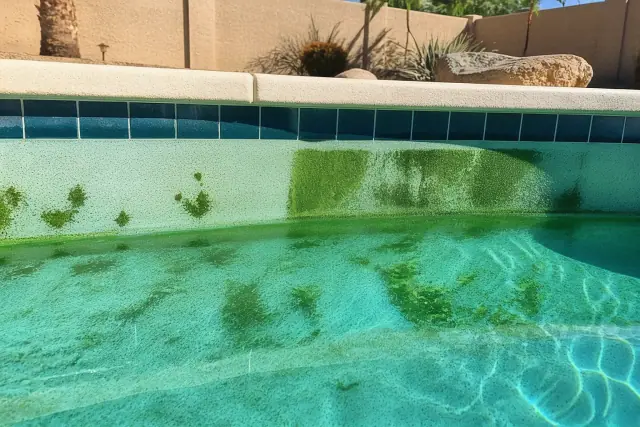
Active green algae or organic film can sit on otherwise intact plaster. This surface-level condition points to chlorine washing before any mineral treatment is considered.
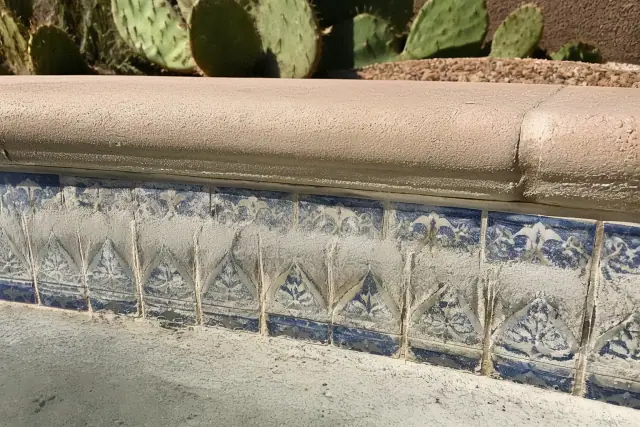
Chalky waterline rings, rough crystallized plaster, and gray or brown deposits that resist brushing indicate bonded minerals. These conditions are the clearest case for an acid wash.
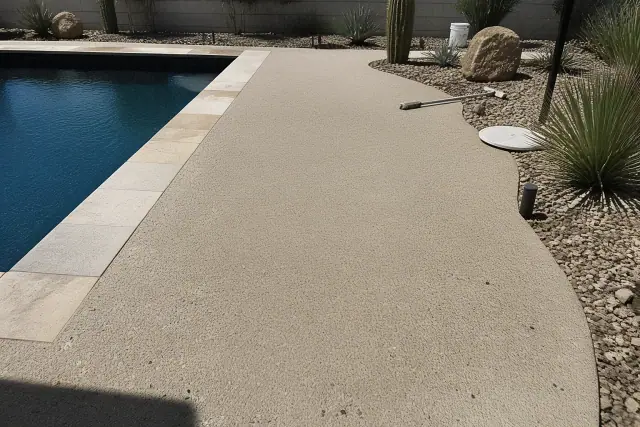
Exposed aggregate or gray gunite signals a worn, thinning finish. Further acid etching can damage this surface, so chlorine washing or a finish evaluation is safer.
Choose chlorine for algae, bacteria, organic film, and surface stains. Choose acid for calcium nodules, scale, mineral discoloration, and rough plaster that ordinary scrubbing cannot clear.
Standard residential acid washes typically run $250-$800; heavier staining, larger surfaces, or difficult drain logistics can reach $950-$1,200. Chlorine washes generally run $80-$400, while full drain-rinse-refill service with water replacement and startup chemistry can run $700-$1,200.
Most pools should be acid washed only every 3-5 years; well water or heavy landscaping runoff may move that interval closer to every 2-3 years. Algae-prone pools may need chlorine washing every 1-2 years because it does not carry the same cumulative etching risk.
Acid wash removes plaster material and can shorten finish life when overused, but it does not sanitize active biological contamination. Chlorine kills organic growth without eroding plaster, but it leaves calcium scale and embedded mineral staining behind.
| Pool Surface Sign | Likely Cause | Better First Wash | What to Do Next |
|---|---|---|---|
| Green water, slippery film, or active growth | Algae or other organic contamination | Chlorine wash | Sanitize and reassess the cleared plaster. |
| Leaf or algae discoloration on sound plaster | Surface-level organic staining | Chlorine wash | Scrub, rinse, refill, and rebalance. |
| Chalky rings or rough, sandpaper-like plaster | Bonded calcium scale | Acid wash | Remove the mineral layer with controlled etching. |
| Gray or brown staining that remains after cleaning | Embedded mineral or metal deposits | Acid wash | Confirm the finish can tolerate an acid treatment. |
| Green growth over a chalky or stained surface | Organic growth over mineral buildup | Chlorine wash first | Add an acid step only if mineral staining remains. |
| Thin plaster, exposed aggregate, or gray gunite patches | Aging or worn finish | Chlorine wash or finish evaluation | Avoid further acid etching until the surface is assessed. |
An acid wash is a full-drain process: wet the plaster, apply diluted muriatic acid section by section, scrub the deposits, then neutralize and rinse before refilling. A chlorine wash can use a drained or partially drained pool, with concentrated chlorine scrubbed into the surface to oxidize algae and organic film. After either method, thorough rinsing, refilling, and a chemistry reset from day one help protect the cleaned finish.
Plaster age and thickness, stain depth, water source, shade, tree cover, bather load, and landscaping runoff can all shift the recommendation. Well- and canal-fed water can contribute mineral staining, while Phoenix's 100+ days a year above 100°F and monsoon dust can speed algae growth and green-outs. Weekly water testing and chemistry balancing catch both calcium and organic buildup before a drained-pool wash becomes urgent.
Can chlorine remove a deep mineral stain? No-it can lift organic discoloration, but bonded calcium and metal deposits usually need acid. Is acid washing a safe do-it-yourself job? The process requires controlled dilution, full PPE, ventilation, runoff neutralization under Arizona Department of Environmental Quality guidance, and careful refill chemistry; an overly strong mix can permanently etch plaster or damage tile. If gray gunite patches already show, stop acid washing and evaluate pool-finish restoration.
Describe whether the problem looks green and organic, chalky and mineral-based, or embedded in worn plaster. A pool-surface assessment can confirm whether chlorine, acid, both in sequence, or finish restoration is the appropriate next action.