Repair an Intact Pump
A bad capacitor, worn shaft seal, stuck impeller, or tripped thermal overload is often repairable when the motor and housing remain sound.
Phoenix Expert Pool Service can usually determine within minutes whether a struggling, noisy, or leaking residential pool pump is better repaired or replaced by inspecting its motor, seal, and impeller. The decision comes down to pump age, failed-part cost, housing condition, and daily runtime in Phoenix heat.
A bad capacitor, worn shaft seal, stuck impeller, or tripped thermal overload is often repairable when the motor and housing remain sound.
A seized motor, cracked volute or wet end, loose shaft, rust bleeding from the motor housing, or repeated failures makes replacement more reliable than another rebuild.
Compare the repair quote with a complete installed pump, then factor in age and the 8-12 hours a day many Phoenix pumps run during summer.
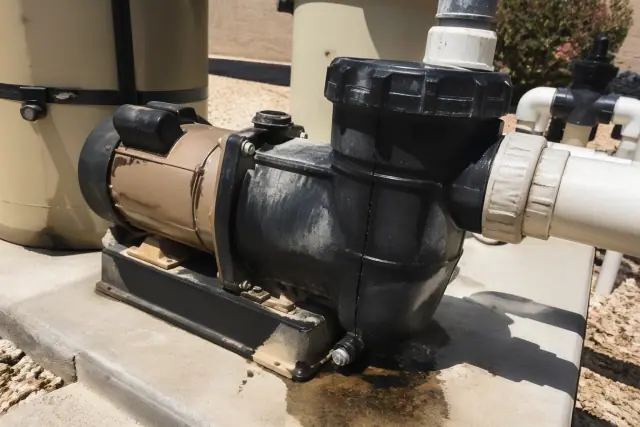
A repairable shaft-seal leak beside water escaping a cracked housing seam. The leak source changes the recommendation.
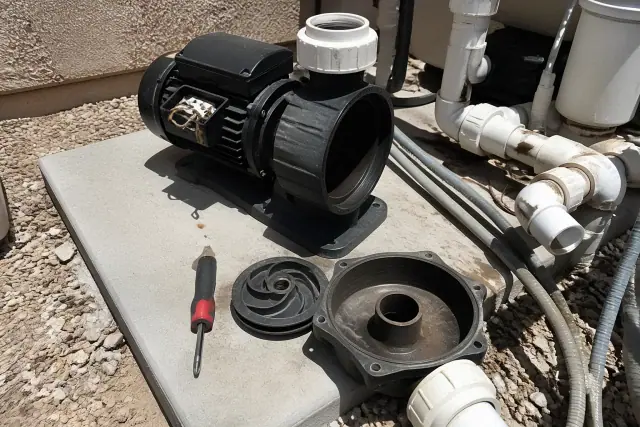
The motor, capacitor, shaft, seal, and impeller being checked for a single failed part. Similar symptoms can come from very different faults.
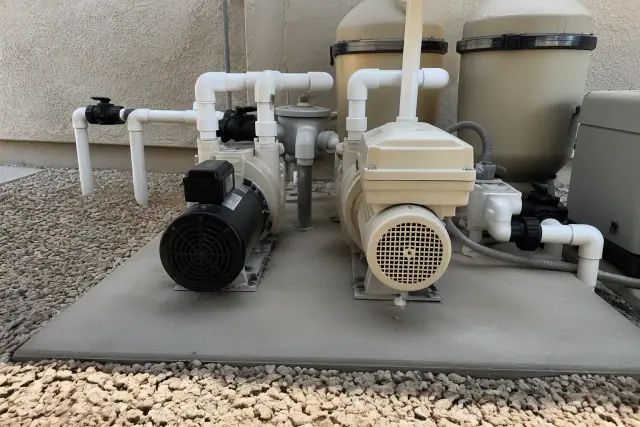
An older single-speed pump beside a variable-speed replacement and its drive controls. Variable speed costs more upfront but can cut pump energy use substantially.
Shaft-seal replacement runs $80-$150 in parts and labor and is especially common on 3-6-year-old pumps. A leak from the housing seam points instead to a cracked wet end.
Grinding can mean worn bearings, while a gravel-like cavitation sound often comes from a clogged skimmer basket or suction-side air leak. Low pressure can trace to a dirty filter or partially clogged impeller.
A basic diagnostic and minor fix typically costs $100-$350; motor rewiring or a seal-and-bearing rebuild runs $350-$700. Compare either scope with full replacement at $800-$2,500 installed.
Do not replace a pump solely because it will not start, prime, or build pressure. A tripped GFCI, bad capacitor, clogged basket, lid-gasket leak, or blocked impeller may be the actual cause.
| Pump Condition | Cost or Age Signal | Likely Choice |
|---|---|---|
| Housing is intact; one capacitor, seal, cap kit, or impeller issue | Under 5 years old and repair stays below half of replacement | Repair |
| Wet end and impeller are sound; only the motor failed | Often practical on pumps under 6-7 years old | Replace the motor |
| Seized motor, cracked housing, loose shaft, or repeated seal failures | Common replacement territory around 8-12 years | Replace the pump |
| Any repair quote | More than 50 percent of a comparable installed pump | Replace the pump |
Repair makes sense when the wet end and housing are intact and testing isolates one inexpensive failure. Capacitors, shaft seals, stuck impellers, thermal overload switches, union air leaks, and vibration from serviceable bearings can often be corrected without replacing the complete pump; even a motor-only replacement may preserve a sound housing and impeller.
Phoenix pumps often enter replacement territory around 8-10 years because long summer runtime, monsoon dust, evaporation, and 100-plus-degree water increase the workload. A seized motor, shaft scored by failed bearings, cracked volute, shredded impeller, or another major failure a few months after repair favors replacement. A no-circulation failure on a 110-degree day also deserves prompt attention because algae growth can accelerate.
A motor-only replacement typically costs $300-$600 installed and works best when the wet end and impeller are sound, often on pumps under 6-7 years old. Variable-speed pumps cost more upfront than single-speed models, but lower energy use can recoup the difference within a few years. Weekly basket cleaning, filter checks, and chemical balancing may extend pump life by a year or two, while another failure within a year or two of a major rebuild usually makes complete replacement the stronger choice.
Share the pump's age, symptoms, and repair history. A motor, seal, impeller, and housing inspection can identify the failed part and compare a repair quote with a complete replacement before work begins.