Surface Cleaning
Empty the strainer and skimmer baskets, skim floating debris, brush walls, steps, and waterline tile, then vacuum the floor.
Phoenix Expert Pool Service builds weekly visits around water testing and balancing, surface cleaning, basket care, and pump and filter checks. That consistent routine matters in Phoenix because intense UV, evaporation, and monsoon dust can change water conditions quickly. This guide explains what belongs on the checklist, what follows a rotating schedule, and which conditions call for extra attention.
Empty the strainer and skimmer baskets, skim floating debris, brush walls, steps, and waterline tile, then vacuum the floor.
Test chlorine, pH, alkalinity, and cyanuric acid, then make measured adjustments instead of adding the same chemical dose every visit.
Inspect the pump, pressure gauge, and visible equipment each week; filter cleaning follows condition and pressure rather than an automatic weekly cycle.
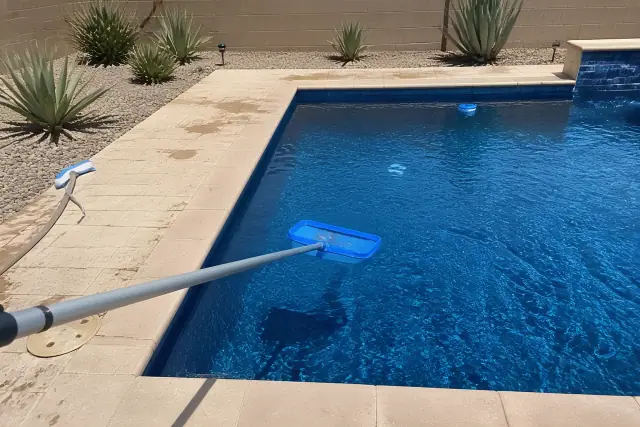
Surface care should reach floating debris, walls, steps, waterline tile, and the pool floor. Seeing each cleaning method makes the expected weekly scope easy to verify.
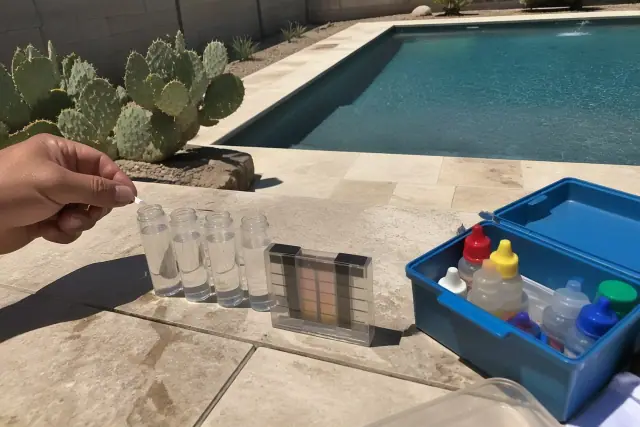
A complete weekly test covers sanitizer, pH, alkalinity, and stabilizer rather than water clarity alone. The readings determine which chemical adjustments are actually needed.
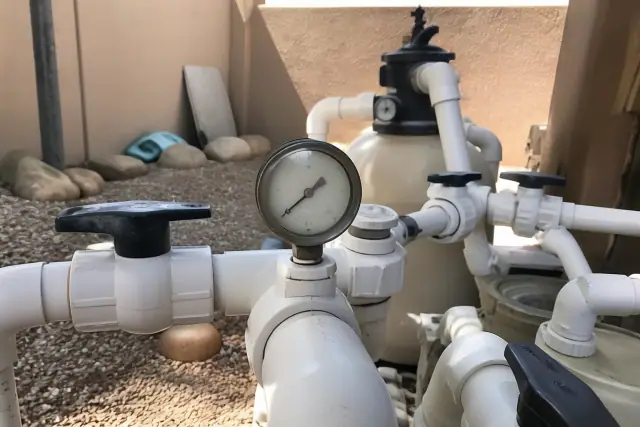
A pressure-gauge reading and a visual check of pump flow can reveal circulation trouble before the water turns cloudy or green. Visible seals, bearings, and equipment should also be checked for early signs of failure.
Use a fixed day for cleaning, testing, balancing, basket care, and equipment observation so small changes do not go unnoticed.
For a standard chlorine pool, target 1-3 ppm chlorine, 7.2-7.8 pH, 80-120 ppm alkalinity, and 30-50 ppm cyanuric acid.
During June through September, consider testing twice weekly; during the July through September monsoon period, heavy debris may require daily skimming.
Check pressure and flow weekly, then backwash, rinse, or clean the filter when pressure rises 8-10 PSI above baseline or the 4-6 week cleaning interval arrives.
| Pool task | Routine | Typical time |
|---|---|---|
| Skim the surface | Weekly; daily with heavy debris | 5 minutes |
| Brush walls, steps, and tile | Weekly | 5-10 minutes |
| Vacuum the floor | Weekly | 10-15 minutes |
| Test water chemistry | Weekly; twice during peak season | 5 minutes |
| Clean the filter | Every 4-6 weeks | 20-30 minutes |
Weekly pool maintenance is a repeatable seven-day routine built on the 3 C's: circulation, cleaning, and chemistry. It should prevent problems instead of waiting for the water to look bad. That consistency is especially important in the Salt River Valley, where summer pool-deck surface temperatures can exceed 120°F and intense UV, evaporation, and storm dust can shift water conditions quickly. Skipping even one summer week can raise chlorine demand and algae risk enough to require shock treatment or more extensive cleanup.
Pool type, bather load, surrounding landscaping, equipment age, and recent algae all affect the amount of hands-on work. Saltwater systems require different testing than chlorine-fed pools, while citrus trees and irrigated landscaping can increase skimming and filter attention. Phoenix water above 200 ppm calcium hardness can also increase scale concerns, so stain and scale prevention may be part of the broader plan. Commercial pools at apartments and HOAs have stricter needs because Maricopa County Environmental Services rules require documented daily chemical logs.
How long should a visit take? A standard residential service usually takes about 20-45 minutes, while a do-it-yourself routine may take 30-60 minutes; basic cleaning alone can require at least 15-20 minutes, and a filter-cleaning week adds roughly 20-30 minutes. How much does weekly service cost? Full weekly care in metro Phoenix typically runs $120-$175 per month with chemicals included, compared with a national range of about $141-$397 depending on pool size and complexity. How long should filtration run in summer? A minimum of 8 hours daily helps maintain circulation, though pool conditions can change the recommendation. A green pool cleanup is different from maintenance and can require multiple days of treatment, extended filtration, heavy brushing, and sometimes an acid wash.
Professional help makes sense when cloudy water persists despite balanced chemistry, the pump cycles on and off, the filter will not hold pressure, or the water begins turning green. Share the pool type, equipment condition, recent readings, and visible symptoms so the maintenance scope can match the pool.